Lucretia Osborn McKleroy: “The Most Interesting Woman in the World… you’ve never heard of” by J.Macon King
Photos courtesy of the William H. McKleroy family.
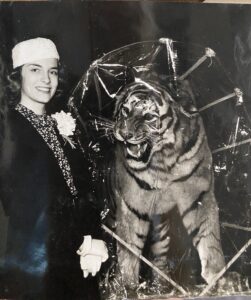
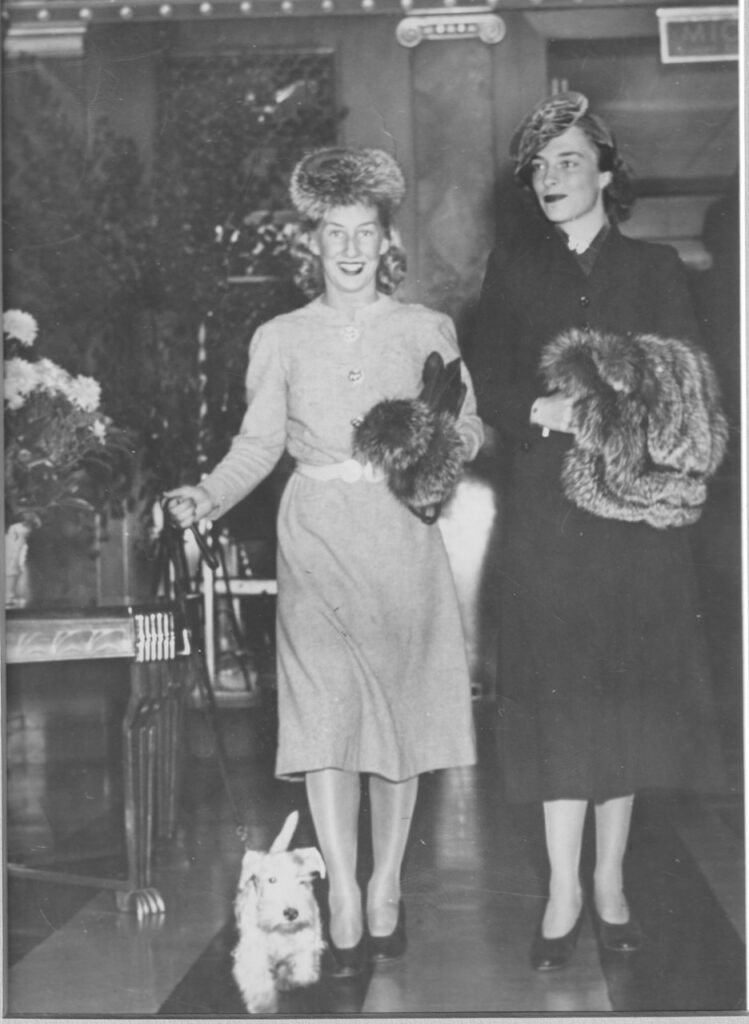
Lucretia “with her dog Spot.” Modeling.
Lucretia Perry Osborn McKleroy was raised in a more glamorous era, Great Gatsby’s Jazz Age, when industrialists, scientists, socialites, and the fabulously wealthy made fascinating newsprint for the common folks. Rags to riches, downfalls, risqué behavior and scandals made headlines. British nobility was still idolized but American “royalty” was based on wealth. These aristocratic families were the ones who actually earned their stature the old-fashioned way— envisioning, working hard, building and industrializing a nation. The socialite women, often glamorous, were the predecessors to Hollywood movie stars.
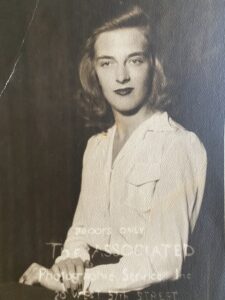
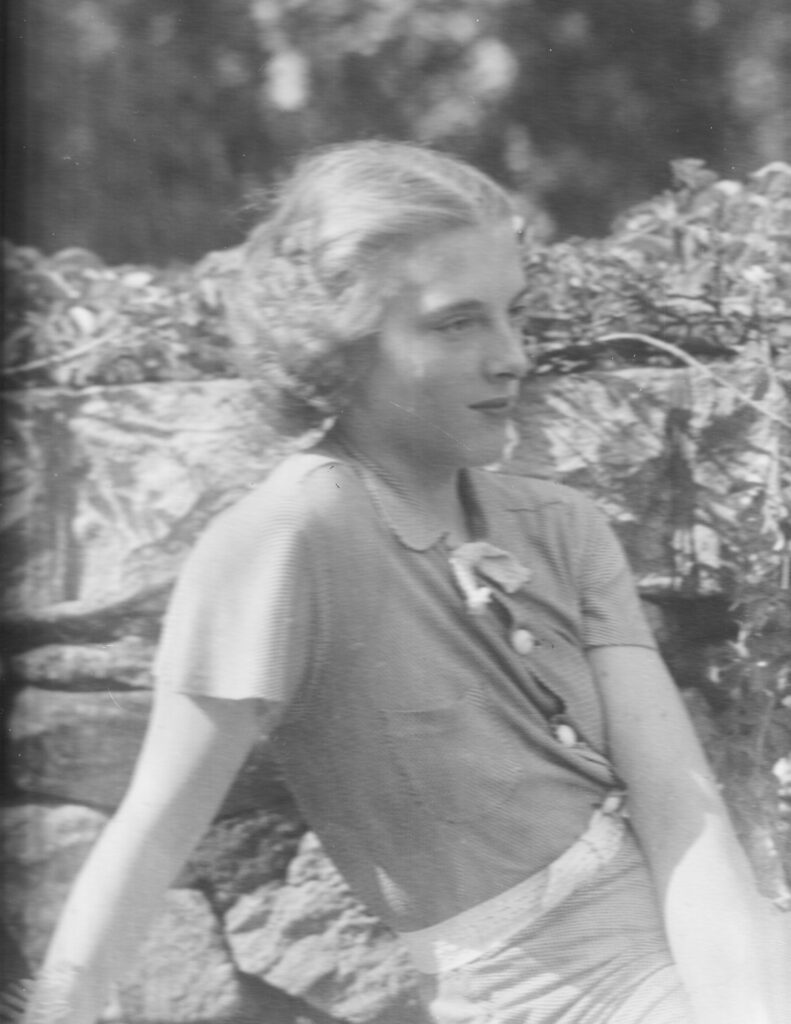
Lucretia portrait. From original family photo.
Lucretia was quite the belle of the ball with beauty, smooth skin, alternating hazel-green eyes, seasonal honey-blonde tresses, angled features and slim figure. Gentlemen of all ages were smitten. Her pedigree, wealth, and social-column mentions didn’t hurt. On transatlantic voyages the photogenic lady was always seated at the Captain’s table. When word was out of her visiting her grandfather’s authentic castle “Castle Rock” high on the Hudson Highlands, brazen West Point cadets were known to recklessly swimming across the mile-wide Hudson River to to attempt to woo “the princess of the castle.”
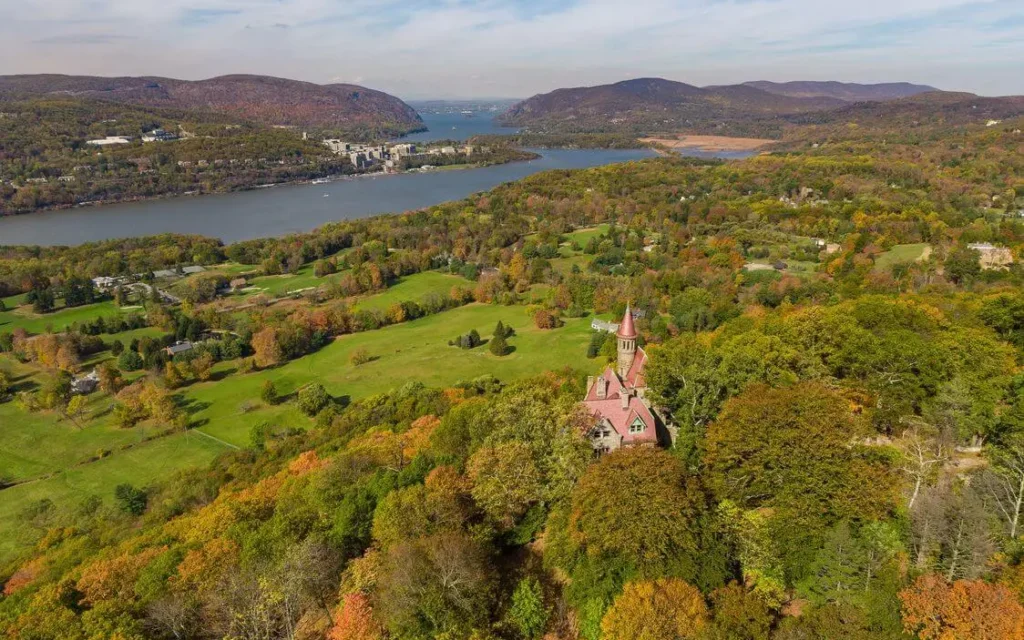
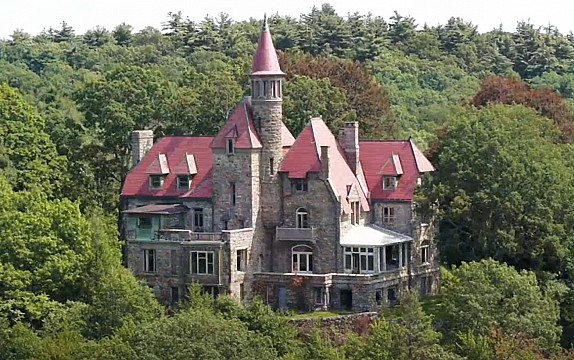
Castle Rock above the Hudson River and West Point. Photo by Tim Lee from 2020 real estate listing.
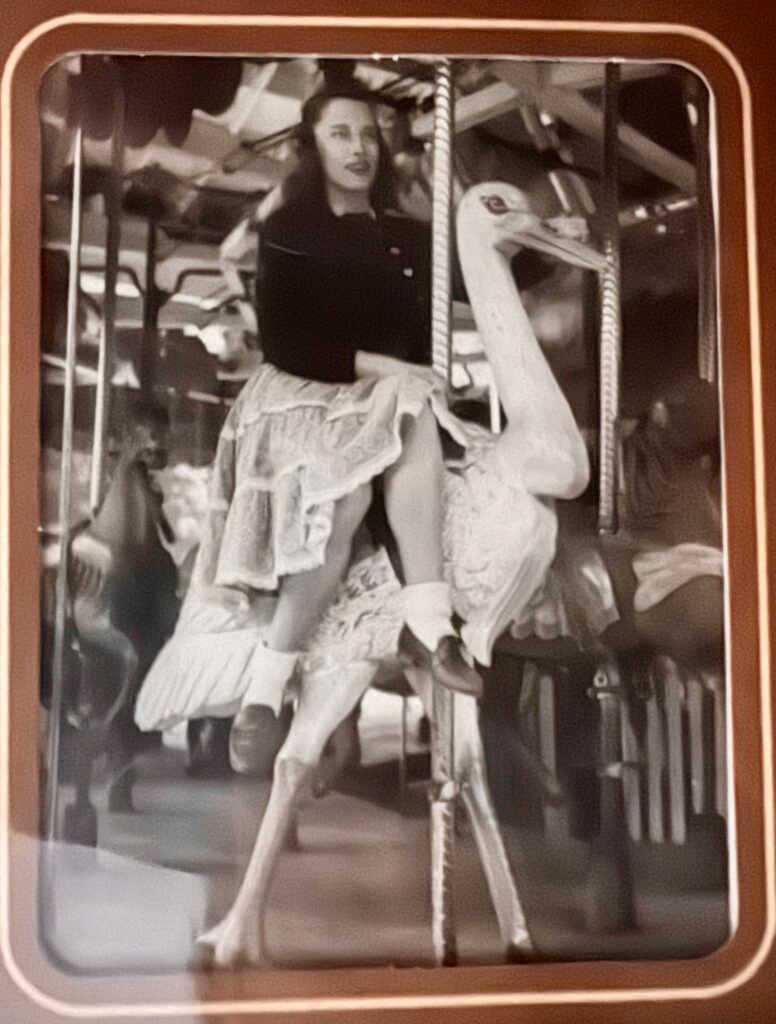
Lucretia modeling on carousel, perhaps starting the bobby-soxer fashion. Age early-mid 20s?
Lucretia would become a poet, playwright, novelist, model, docent\staff at the NY MET, SF’s Legion of Honor and de Young, equestrian, skilled skier, pianist, Girl Scout leader, Red Cross nurse. All while as a socialite of New York and San Francisco. Her work was published in The New Yorker,San Francisco Magazine and produced on stage.
Lucretia lived in Glen Cove Long Island, Garrison and Manhattan, New York, Florence, Italy, Carmel, CA, San Francisco, Davos, Switzerland, and Alpine Meadows (Lake Tahoe).
Lucretia (Lu) Perry was the daughter of Lt. Col. Alexander Perry Osborn, prominent New York lawyer and first VP of the American Museum of Natural History. Her grandfather was the famed Henry Fairfield Osborn, Sr. (H.F.O.).
Lucretia was born in 1916 and unofficially Lucretia the VIII from traceable family lines. Near her fifteenth birthday, the changing landscape of post-war marriage and divorce of the period shook the young teen’s life. Lucretia’s mother, Anne (ne Steele), abandoned her wealthy husband, Lucretia, twin daughters and much younger son. As the oldest child, Lucretia took on many of the burdens of sibling management from the working father.
Much later, Lucretia’s own San Francisco family would derisively, yet humorously, call wayward Anne “The Bolter” from the oddly similar incident in the 1930s of a more infamously known, beautiful debutante socialite. While Anne returned to her Baltimore socialite life, “Bolter” Lady Indina Sackwell* left her wealthy husband to become the “chief seductress” of the scandalous Kenyan ex-pat enclave depicted in the movie White Mischief (event described following).*
Lucretia’s visionary grandfather, H.F.O., was one of the most well-known scientists in the United States during his own lifetime, “second only to Albert Einstein.” H.F.O. (aka “The Professor”) was famous for paleontology discovery and naming such as the Velociraptor (of Jurassic Park fame) and T Rex, and involved in the so-called “Dinosaur Wars.” He was long-time president of the NYC American Museum of Natural History and is credited for the shaping of modern museums. H.F.O. was author of dozens of natural history books, such as Men of the Old Stone Age and Origin of the Mammals.
H.F.O.’s wife, Mrs. “Lulu” Lucretia Thatcher (Perry) Osborn, was also an author (Washington Speaks for Himself and others). The couple were notable for their friendships and correspondence with Teddy Rosevelt, John Muir, and (like H.F.O.’s railroad tycoon father, William Henry Osborn) patrons of Hudson River School with artists as Frederic Church and Albert Bierstadt. Lucretia’s father and Lucretia’s middle name indicated their lineage (through Grandmother Lulu Perry) from historic Naval heroes Oliver Hazard Perry and his brother Commodore Matthew Perry.
(Editor note: It’s not you, the similar names of Osborn and Lucretia throughout are confusing.)
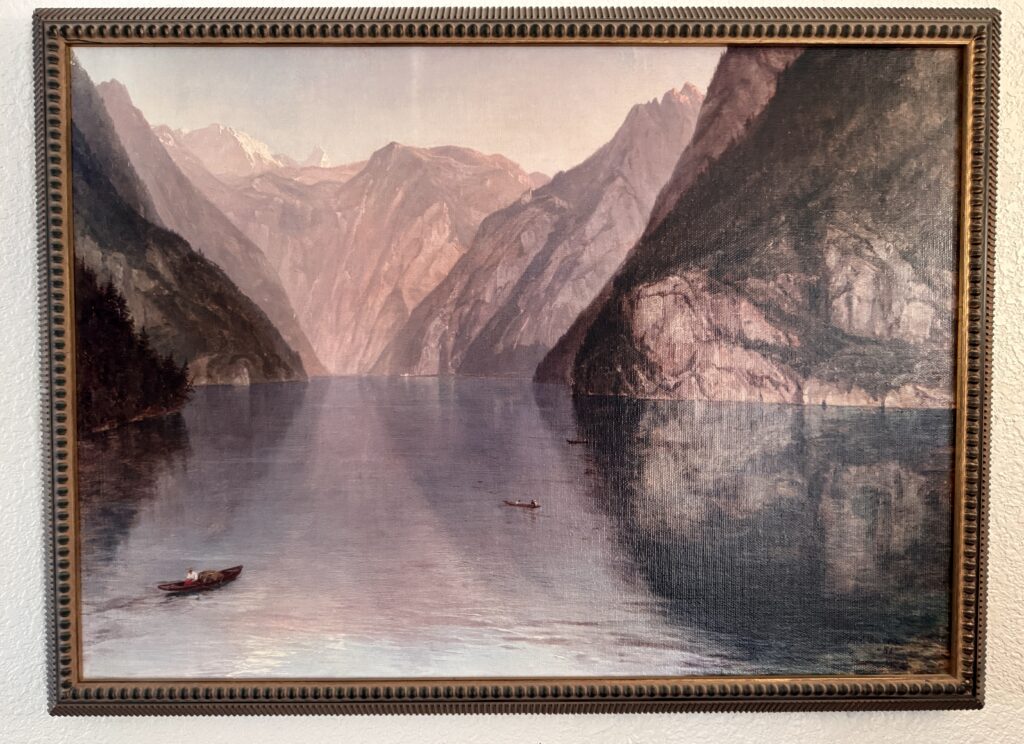
This wondrous painting by the prolific and well-traveled Church hung on the walls of the Osborn\McKleroy homes for many years. Rarely seen painting of Bavaria? from 1881.
H.F.O.’s younger brother, William Church Osborn, Lucretia’s great-uncle, served as president of the Metropolitan Museum of Art (the MET), art collector, in between being president of several railroads. W.C.O.’s brother-in-law was J. P. Morgan. H.F.O.’s son, Lucretia’s uncle (father Alexander Perry Osborn’s older brother), Henry Fairfield Osborn, Jr. wrote Our Plundered Planet in 1948 which became very influential in the early Environmental movement.
If the family tree is shaken, one will additionally find Nathaniel Bowditch, author of the The American Practical Navigator (aka the Bowditch), an encyclopedia of navigation tables still in use by sailors today. More exciting relatives are the Robert Gardiners of Gardiner Island (off Long Island) and their adventurous relationship in 1699 with legendary Captain William Kidd, privateer and pirate, aka Captain Kidd. The buried pirate’s treasure and the still-existing earthenware “Kidd Pitcher” gift to the Gardiners is a fascinating story in itself.
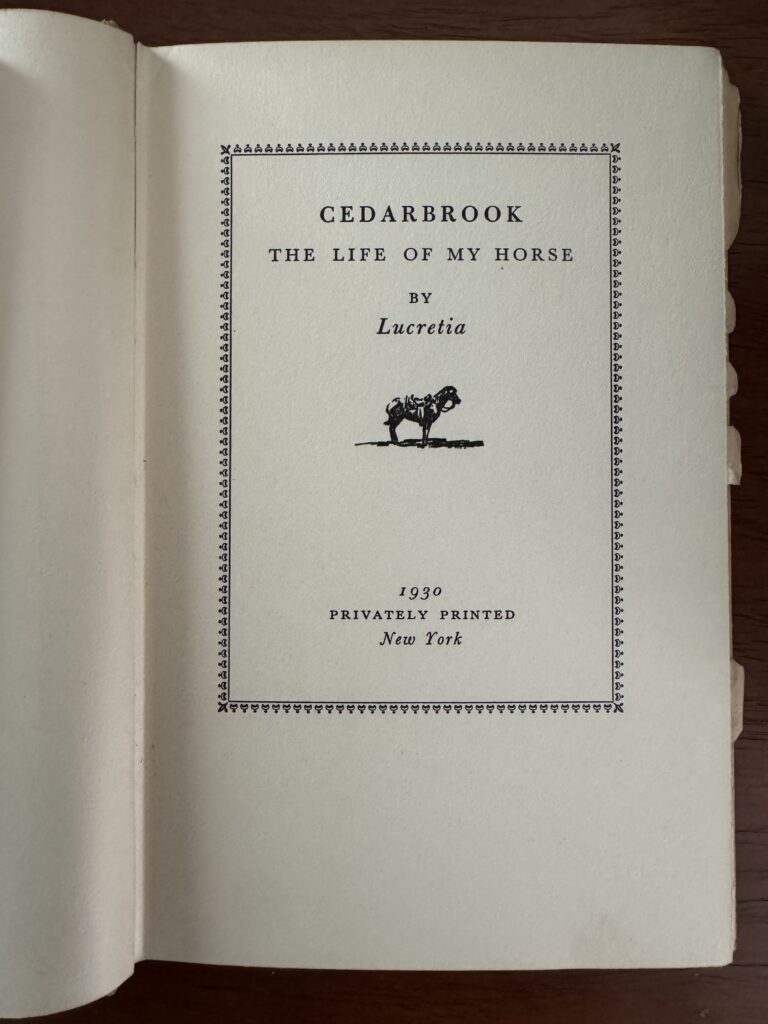
Lucretia’s love of equestrian activities helped her overcome the bolting of her mother. She found true solace with her adoption of the horse, “Cedarbrook.” Cedarbrook was the titular subject of her “autobiography” of the horse’s life, loves, and work, much like the classic Black Beauty. The novella was published when Lucretia was just fourteen.
Another adopted horse gave the Osborns quite the surprise. Whenever “Skipper” heard music, he would rear up and dance on hind legs. They had not known that Skipper had previously performed in a circus! Lucretia loved the magical musical animal and soon put on her own circus shows for family and friends. Lucretia’s adventures of riding atop dancing Skipper became talk of the town.
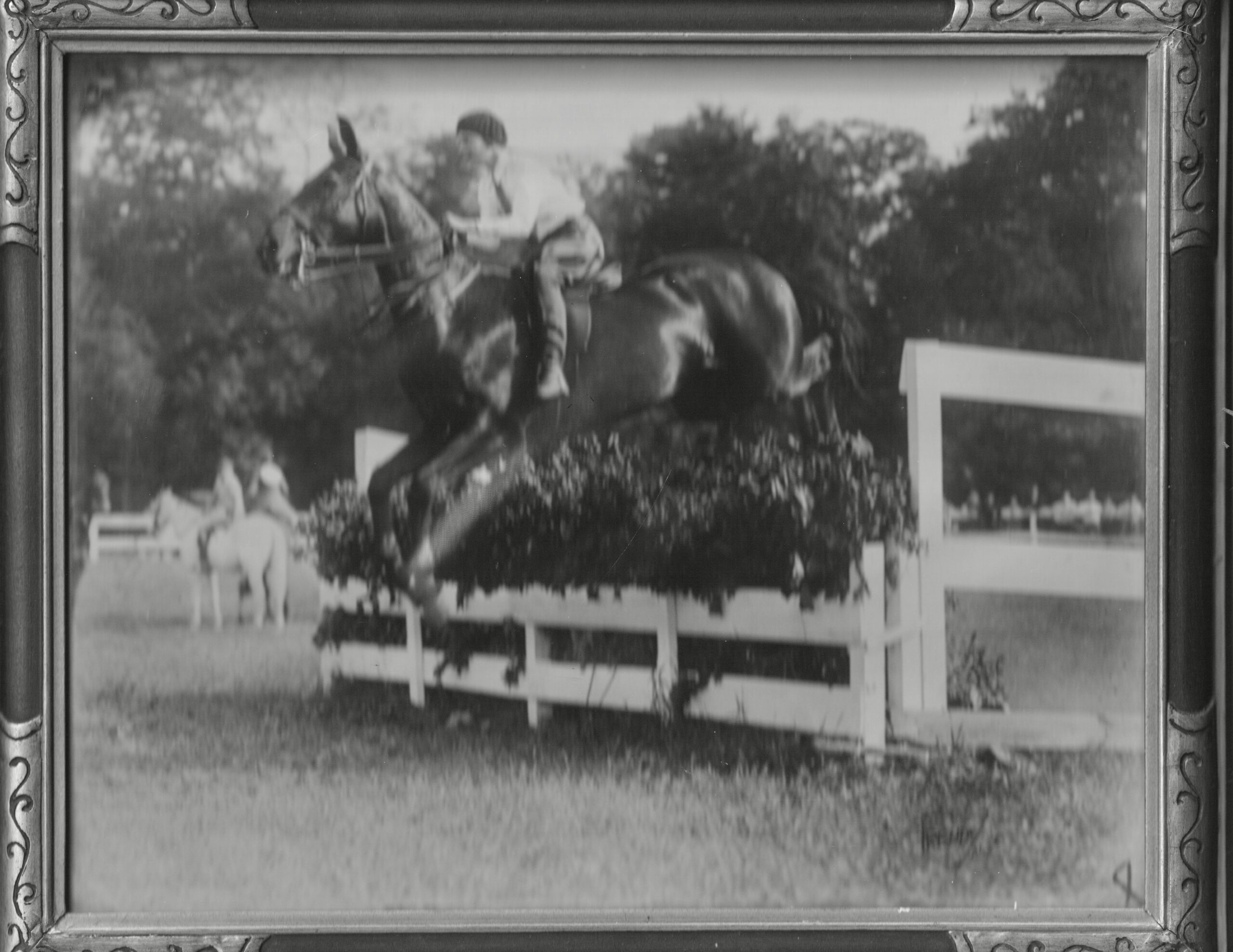
Lucretia Osborn jumping, likely at the Garrison, NY horse show.
Young Lu spent interesting time and summers at the family estate’s “Wizard of Oz witch’s castle.” This is “Castle Rock” in Garrison, NY. Castle Rock, aka Osborn Castle and with its Romanesque rough-hewn stone walls, is one of the most recognizable man-made landmarks of the Hudson River Highlands. According to persistent folklore, the castle was the inspiration for the Baum book castle, used as a model for the movie, and the Winged (flying) Monkeys’ uniforms similar to West Point’s. Further clues: “Oz” is similar to “Os”born and in the movie, Professor Marvel (as noted above, H.F.O. was fondly called “The Professor”) is also the Wizard of Oz. The estate was acquired and built by H.F.O.’s father, former Illinois Central Railroad president William H. Osborn.
Castle Rock, estate of former Illinois Central Railroad president William H. Osborn in Garrison, New York. 1881. First summer, then main residence of the Osborn family. Expanded over time with wings, it sits on the hill of the same name, looking down on the Hudson River 620 feet below. Property structures include original farmhouse—”Wing and Wing,” Gothic Revival—1882 “The Birches,” rustic “Woodsome Lodge” and stone “The Gatehouse.” Re-roofed 2010. Photo by Tim Lee from estate listing.
While much of the land was donated to the state in the seventies by the family for public use, Castle Rock itself and parcel was not. In 2021 it was purchased by George Carroll Whipple, III (not Charmin squeezing Mr. Whipple), at one time married to Kit Tobin of the San Francisco’s de Young family. **
I was given a personal tour some years back, pre-sale. A close-up viewing and (authorized only) grounds strolling including Lake Lucretia and interior is as incredible as it looks. The long-time caretaker Chip. (friendly with the Osborns\McKleroys) in a later phone conversation post-sale and contemplating retirement, made an intriguing remark. He said to the effect, that even though he lived alone there, he was never alone because spirits come and go in Castle Rock. When I asked Chip, “Like a portal?” He agreed. (H.F.O. did pass in his study at Castle Rock and his wife possibly in another building there.)
Lucretia poses at grandfather Osborn’s Castle Rock. About age 16.
So perhaps, on my visit, my imagining was not so far-fetched—the Wicked Witch’s flying monkeys streaming from the witch-hat tower. Apparitions of restless spirits, neither here nor there. Or long-white-bearded John Muir writing, en plein air, on one of the balconies, as he indeed did much of his best-known book as a guest here, The Yosemite. Better yet, the beautiful young Princess Lucretia, gazing to the Hudson, awaiting rescue by a brazen cadet.
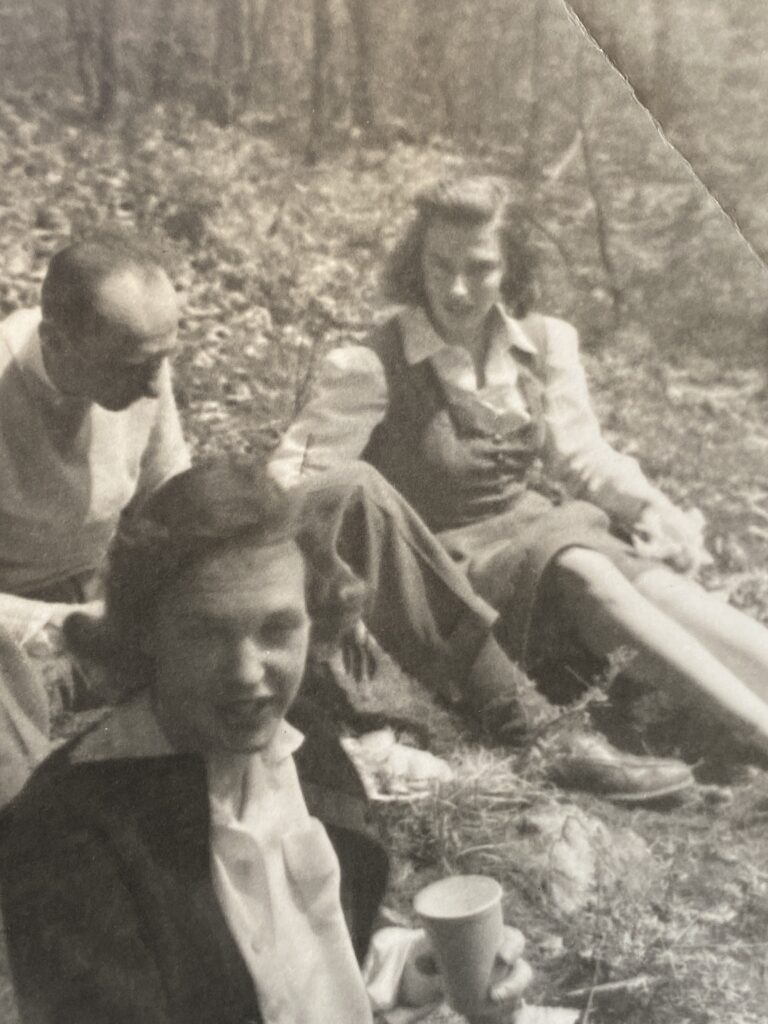
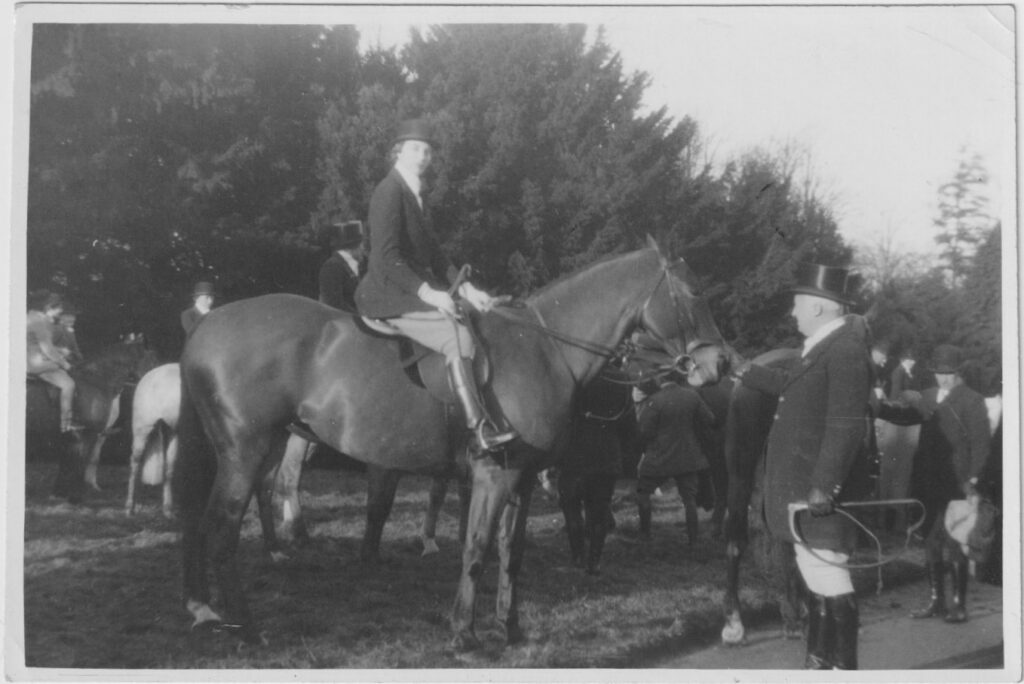
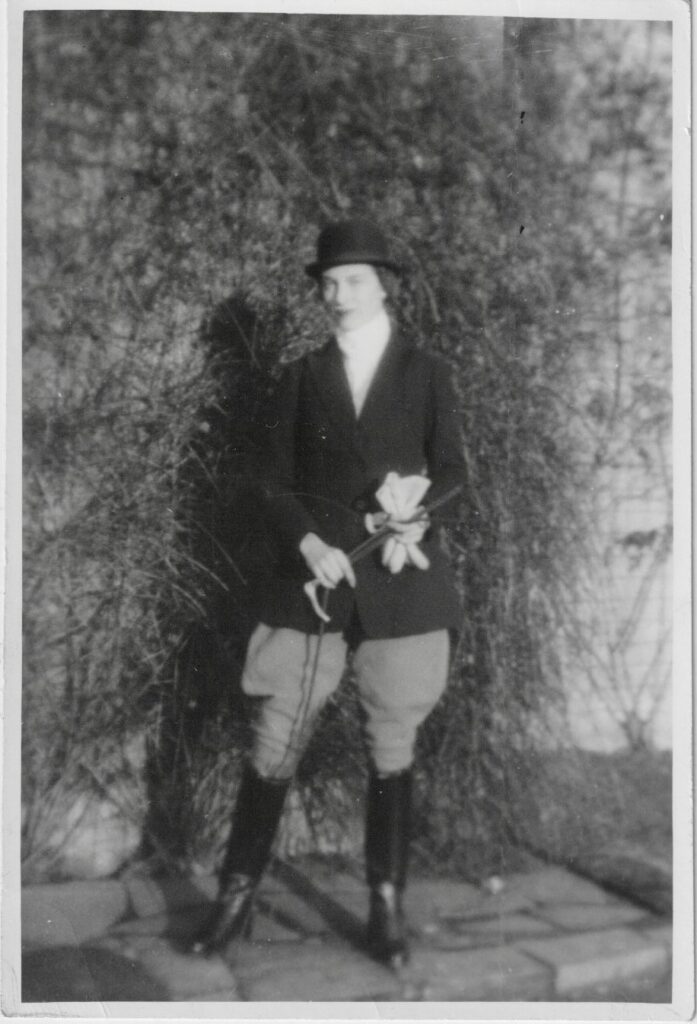
Lucretia (right) modeling at Park Plaza Hotel.“Citizen Kane” picnic near Lake Lucretia, Lucretia on right.Lucretia in hunt attire and astride, ready for The Hunt, the Cotswold, England.
Lucretia Perry Osborn.
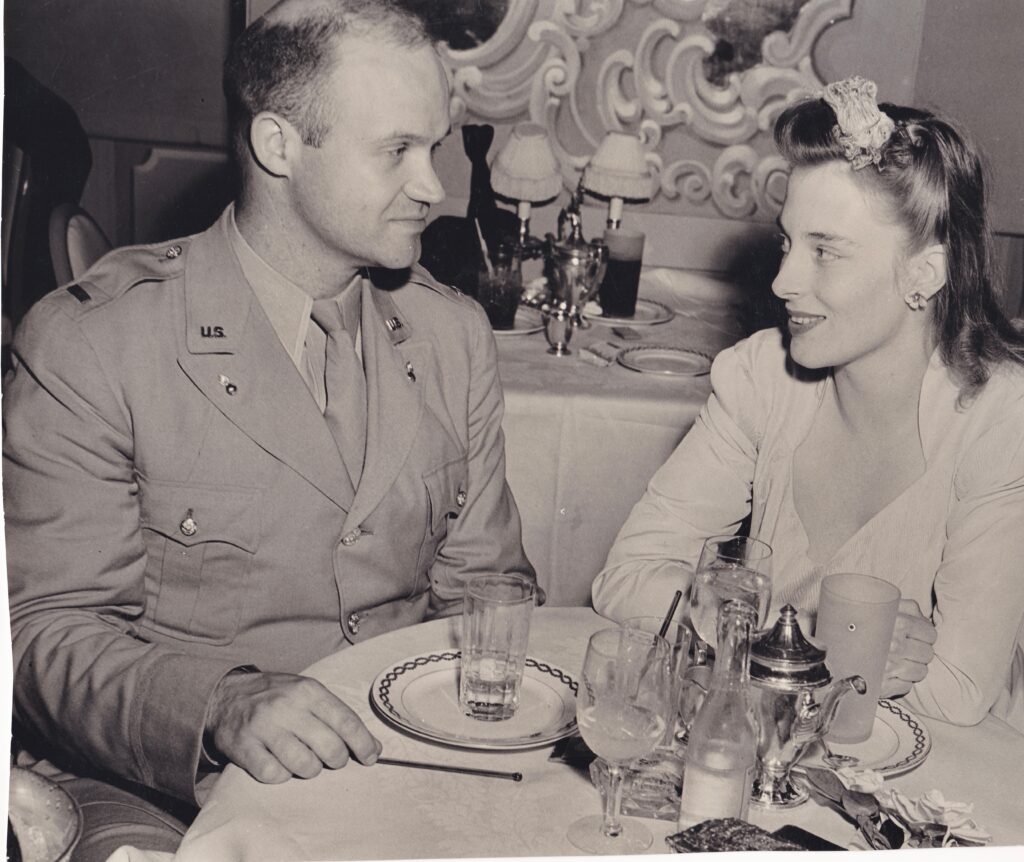
This most eligible bachelorette met her match in William Henry McKleroy Jr. on a upstate NY ski lift. The impressive six three 230 pound McKleroy was a charming southerner. Perhaps the loss of William’s father, dying in ten-year-old William’s arms, resonated with Lucretia’s own loss. (This innocent age for tragedy would reoccur.) The handsome couple fell in lasting love. From the Anniston, Alabama banking family, William would soon propose. Their marriage linked two established American families—Yankee and Southerner. William would become an Army Lt. Col. himself (like her father) during WWII.
Falling in love on an early date with William McKleroy in Manhattan.
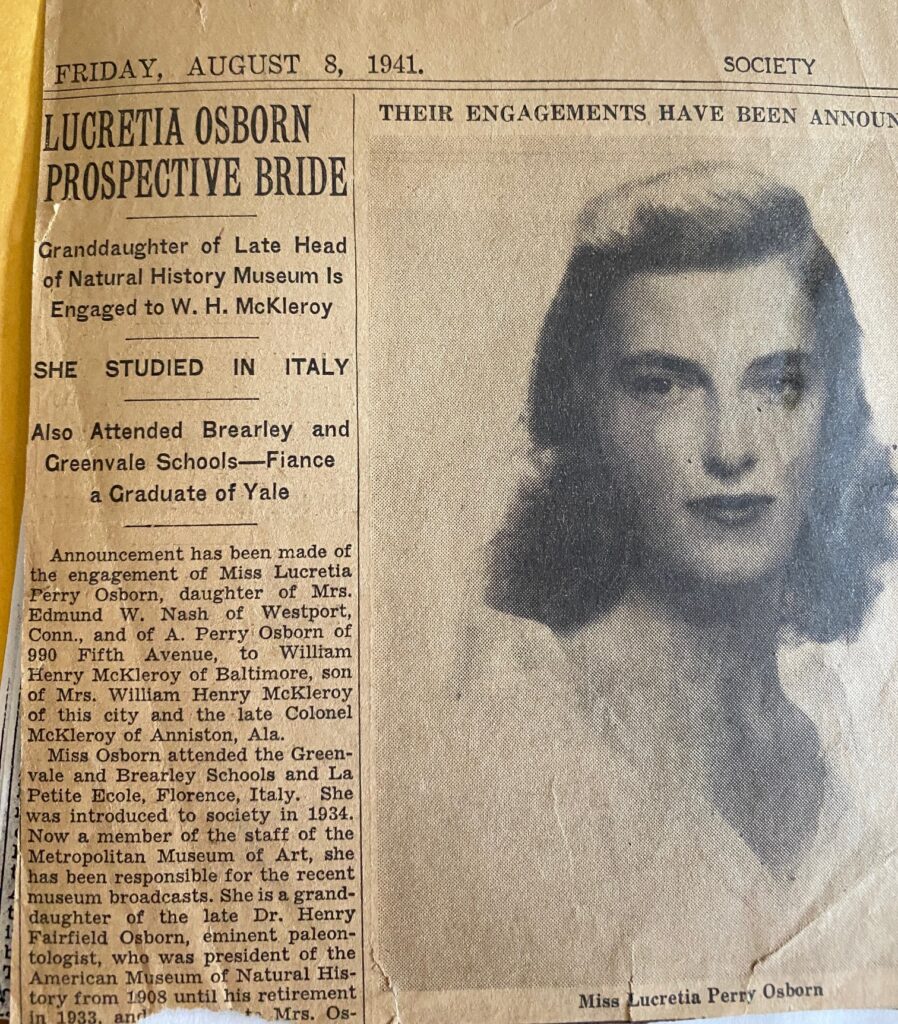
New York Times society page engagement announcement.
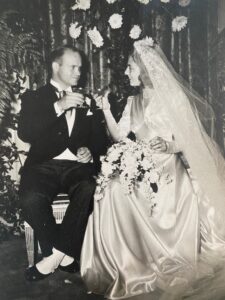
Now Mrs. McKleroy in wedding splendor.
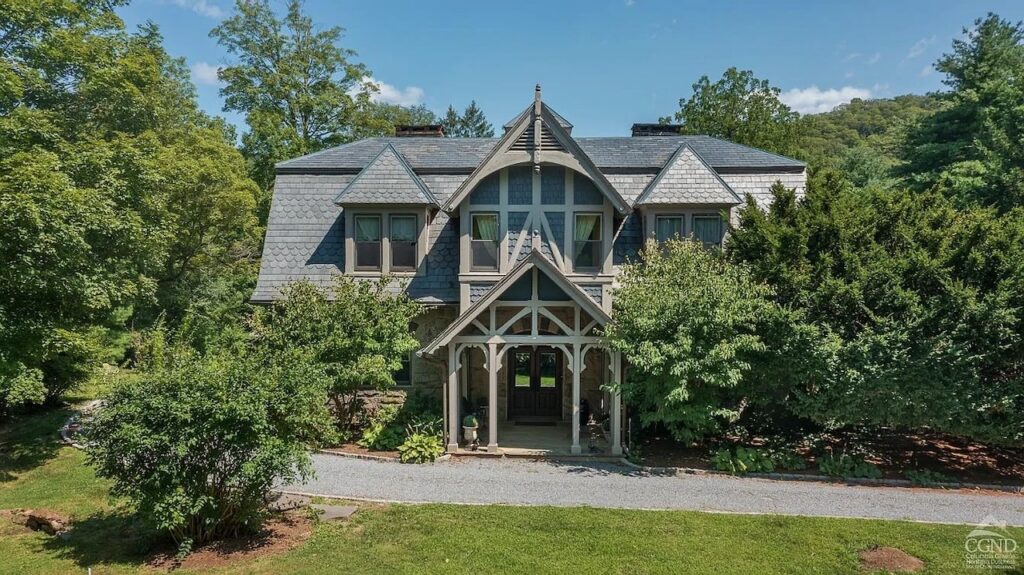
The Newlyweds probably began their honeymoon on Castle Rock grounds, at “The Birches”, typically used by Osborn family members after marriage. Family members report that the couple remained very much in love and nearly inseparable.
“The Birches” —former home of William Church Osborn (1862-c.1951), brother of “the Professor” (as family and friends called him), H.F.O. Sr. (1858-1935). “Designed during the Gilded Age by Gothic Revival master architect Ralph Adams Cram, the Birches has a grandeur rarely seen since the Gilded Age. grand proportions of the formal rooms call to mind Edith Wharton and Jay Gatsby.” “…that looks up to one of the nearby Appalachian Mountains that define the Hudson Highlands region.” Not formally part of the main estate. Photo by Tim Lee and quote from Millbrook Reality listing.
*The 2008 bio, The Bolter, on Lady Idina Sackville, was written by the great-grand daughter, Frances Osborne (unrelated to the Osborns), and married and divorced (3rd of 5) to the 22nd Earl of Errol of the Happy Valley Set, the Kenya ex-pat enclave of scandalous aristocratic adulators. This cad of an Earl was murdered in a love triangle which was the basis for a Greta Garbo film and the well-regarded 1987 film White Mischief with, cleverly, another Greta, Greta Scacchi.
** Re the sale to George Whipple III of Carmel, CA, with ties to San Francisco. Once married to Kit Tobin, daughter of San Francisco Chronicle director Michael de Young Tobin and great-granddaughter of San Francisco newspaperman M. H. de Young, benefactor of de Young Museum.
H.F.O. lived at Castle Rock …”until his death in 1894. His son, Henry, inherited the home and owned it until 1935, followed by William’s granddaughter, Virginia Osborn, from 1935 to 1955 and his grandson, Alexander Osborn, from 1955 to 1975. Alexander was its last occupant. It has been owned for the past 45 years by a private company, Castle Rock LLC.” As reported by Michael Turton in The Highlands Current, May 1, 2021 edition.