A(NOTHER) METAPHYSICAL MOVIE REVIEW
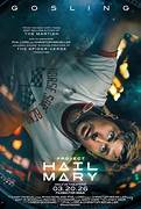
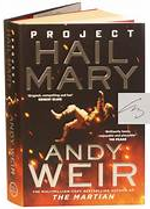
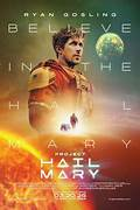
Project Hail Mary
By Robert V. Tobin
DIRECTOR: Phil Lord and Christopher Miller
PERFORMERS: Ryan Gosling, Sandra Hüller, James Ortiz
WRITERS: Andy Weir (novel) and Drew Goddard (screenplay)
DIRECTOR OF PHOTPGRAPHY: Greig Fraser
COMPOSER: Daniel Pemberton
RUNNING TIME: 2 Hours 36 minutes
Precisely when we need to hear it, Project Hail Mary says sustainable solutions come from least likely suspects: people like us doing what they must … not out of confidence in their success, but rather to avoid worse alternatives.
Ryan Gossling, this movie’s primary performer, never shows a chiseled physique, cocky attitude, or other telltale signs of a superhero. To the contrary, his character is named Dr. Grace precisely because he has none. Not much charm or courage either, until he needs both. Operating so far below his potential when we first meet him, he appears distinctly un-American – lacking the sense of pride or thirst for glory on which redemption stories often rely.
Like most innovators, Dr. Grace is young, brash, and ahead of his time. He is a loner in a profession requiring socialization. He is plagued by self-doubt while asserting scientific truths far outside the mainstream. He gets a lesson in humility when accepting his own theory as wrong saves not one, but two different solar systems.
Like many of us, Dr. Grace has trouble receiving compliments and struggles to maintain coherence when facing adversity. He resides at the intersection of vulnerability and insecurity. After years of rejection fueled by self-sabotage, he is an unlikely bridge-builder when internal squabbles and external threats become entangled. His first instinct is to deny, then ignore what will soon kill him and everyone else. Only after much kicking and screaming is he obligated – coerced, actually – to contribute to the Greater Good.
Such resistance exists not only on a personal level. This film begins from a place of global cooperation, making only passing references to difficulties attaining it. In a world of testosterone-fueled arguments, it takes a woman to lead a world-wide effort to eliminate looming danger. Yet she too shares personality traits and diplomacy methods with those whose “move fast and break stuff” approach affects people as well as things. The dire ends she faces justify her means in this case, but not always.
Project Hail Mary highlights one of the many contradictions of life: its need for continuity requires constant change. Accommodation is essential to adaptation, yet persistence is key to success. Communication obstacles arise as competing interests emerge. Triumph requires patience, tolerance and other dispositions not cultivated in the competitive Shark Tank world of commerce, finance, and yes even science.
This movie also depicts the challenge of leadership when the best interests of the most are in the least interest of a powerful few. Getting people to swap individual short-term gains for less tangible communal benefits is a highly underrated capability. Too often, we focus on the authority to make decisions rather than the trust required to implement them; without both, Dr. Grace’s rocket ship would have never left its launching pad.
In his new book, A World Appears, Michael Pollen says science erodes our empathetic connection to the universe. Project Hail Mary argues otherwise, underscoring the human element upon which technological advancement depends. To establish common ground, navigate unexpected hindrance, and develop something as unquantifiable as friendship, machines need us as much as we need them.
Also unprogrammable: willingness to take a chance, risking what we have in order to get what we need. Emotional, ethical and spiritual influences defy rational analysis or technocratic proficiency. Our obsession with the upside of Artificial Intelligence distracts from downsides pertaining to employment, energy and the environment as predictable as they are unavoidable. Machines, like people, create problems they don’t recognize and can’t fix – but on a geometric and potentially exponential scale.
Project Hail Mary also makes a case against the demonization of difference so prevalent in today’s society. Rocky, Dr. Grace’s counterpart in their ambitious endeavor, could not be more otherworldly. The depth of their rapport is notable considering it began without a basic vocabulary or conceptual context. Watching this seemingly incompatible pair find similarities outweighing their differences encourages those who share the same genus and species to do the same.
We learn much from the communication process they devise. Rocky states what he wants to say before he says it, e.g. announcing “question” before making an inquiry. By pre-labeling things as “sarcasm” or “joke,” they are less likely misinterpreted. His use of repetition to convey his depth of feelings – saying “sad” or “glad” two or three times to express the quantity as well as quality of his emotions – brings a clarity to intergalactic interactions sorely lacking here on Planet Earth. This facilitates their capacity to simply coexist, the ‘soft skill’ hardest – and most essential – to acquire and self-reinforcing, unlike victory, fame, or other motivations as temporary as they are elusive.
Both the book and movie version of Project Hail Mary bring attention to the relativity of time as well as space. Attention shifts abruptly between traumas of the past, worries in the present, and fears lurking in the future, the same way these seamlessly interweave in our daily lives. Dealing with all but bothered by none is a lifelong job we learn by maintaining awareness in a universe continually expanding and accelerating.
The movies – like life itself – heighten attention to our necessity to suspend disbelief. Faith is required to get up in the morning, eat food someone else produced, and drive 70 miles an hour down the freeway arm’s length away from someone doing the same.
To overcome doubt, sages of the ages encourage us to open up when we want to shut down, reach out when we feel like holding back, and speak up when we’re afraid to rock the boat. They suggest we respond rather than react, listen when we’d rather not pay attention, and hear what’s not being said as well as what is. They recommend not judging others based on how they look, where they’re from, or whether we can understand them. And they advise not to panic when we’re afraid, evade accountability when its ours, or do what we’ve always done just because it’s what we’re most comfortable with and know best.
Rocky and Dr. Grace slowly learn what to do and/or not do by collaborating as willingly in the end as they were skeptical at the beginning. We would do well to make this same transition while exploring our own time in space.
Project Hail Mary is science fiction not just because it unfolds in outer galaxies, but also because it presents threats as ominous as they are remote. Harder to see are our own danger signs increasingly visible in recent decades: 20% loss of butterflies, 30% decline in bird populations, 40% annual loss of honey bee colonies, and 50% of American waterways too polluted for fishing, swimming and aquatic life due to ‘forever chemicals’ (PFAS).
This movie’s message, according to Ryan Gosling, is that the future is not something to fear; it’s something we need to figure out … together. No need to wait for a biological disaster in our own world or another’s to embrace what has always been true: united we stand, divided we fall.
At the end of the book on which this movie was based, the Eva Stratt character who leads this Hail Mary project (excellently portrayed by Sandra Hüller in the film) notes that – until 200 years ago – most people spent their entire in a daily struggle to get enough to eat. She says we have no idea how good we now have it, or that a capacity to dominate needed then is no longer required – or even helpful – today.
Project Hail Mary suggests we start cultivating consensus-building skills by working on the challenges before us, since those awaiting thereafter are even bigger, more complicated, and potentially irreversible.
END
Robert V. Tobin is a brother to sixteen siblings, uncle to more than a hundred nieces and nephews, father of four, stepfather of four, and grandfather of eleven
all brightening prospects for a world founded upon trust, optimism and loving kindness.