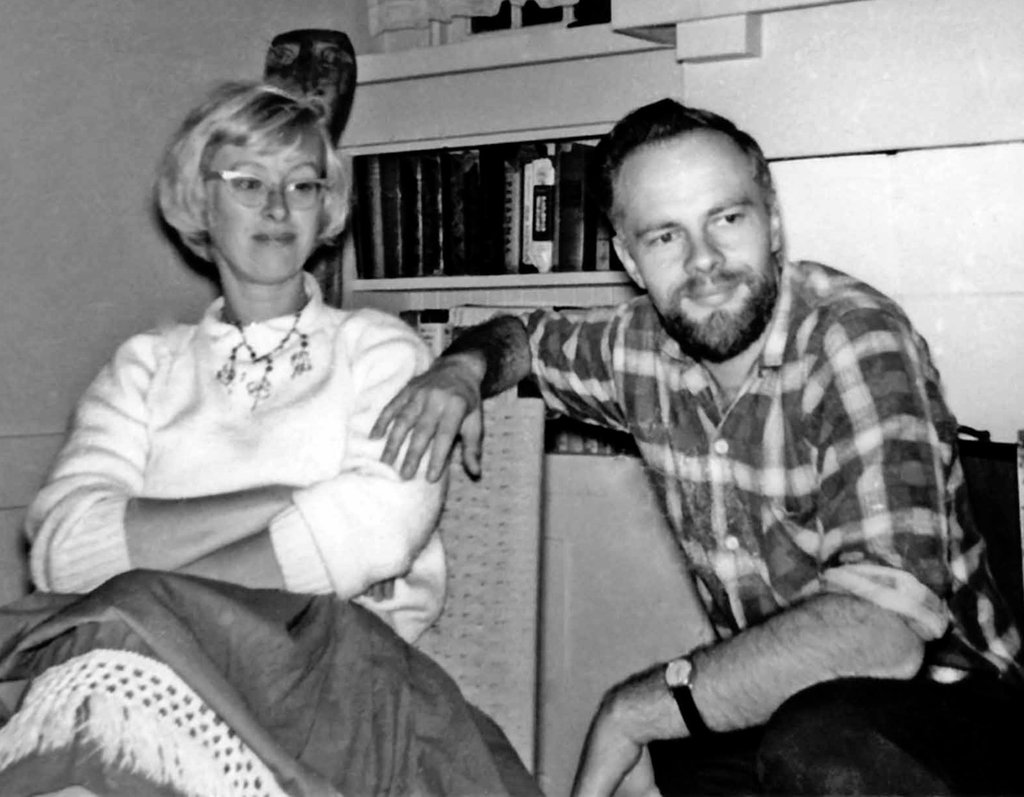
Anne R. Dick’s “Total Recall”: In conversation with J.Macon King
(republished and revised from Mill Valley Literary Review, Summer 2016.)
JMK: Which character (in the book) was Philip?
ANNE R. DICK: They were all Philip. (laughs)
JMK: The characters were all Philip?
ANNE R. DICK: Yes. Of course. (laughs)
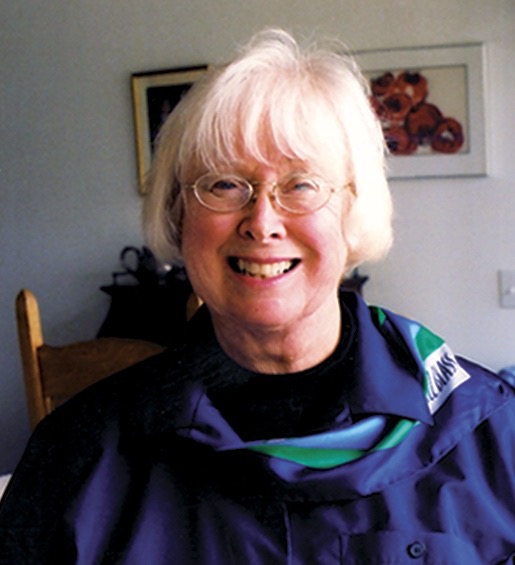
MEET ANNE R. DICK: poet, jewelry artist, novelist, memoirist, horse-vaulting coach, B&B owner, and intellectual. Yet she is best recognized for her marriage and daughter with The Man in the High Castle himself, futurist writer Philip K. Dick.
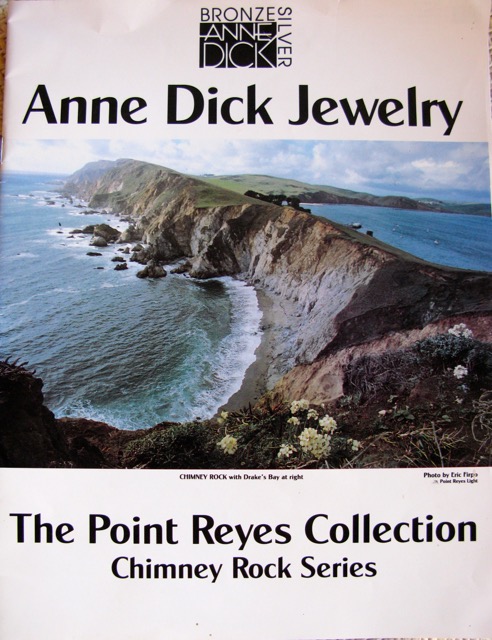
Her bronze and silver jewelry has been sold in museum stores throughout the United States and abroad. Philip K. Dick accurately chronicled the beginning of her jewelry business in his most famous novel, The Man in the High Castle. (Source: Tachyon Publications.) Having retired from jewelry making after 47 years, she continues to write novels and poetry. (Anne’s poetry follows.) Anne Dick lives in Point Reyes Station, California in the same house where she lived with Philip K. Dick.

With the televised Amazon event mini-series, “The Man in the High Castle,” the seemingly cyclical interest in the legendary Philip K. Dick surged. I met with Anne during the launch of the acclaimed event (December, 2015 and followed up May 4, 2016). This is probably Anne R. Dick’s final in-home interview and the most intimate. Less than a year later, she passed April 28, 2017 at age 90 years.
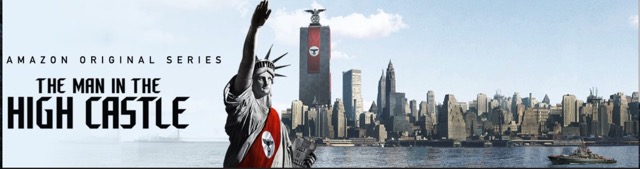
Philip K. Dick produced a tremendous output of literary gems. No wonder Hollywood continues to mine his mind. The above novel won the Hugo award. Total Recall movie is based on his short story “We Can Remember it for you Wholesale,” first published in The Magazine of Fantasy & Science Fiction in 1966. Minority Report (original) was one of the best PKD adaptations. Spielberg’s film stayed fairly true to Dick’s story of the same name and is exciting and visually striking.
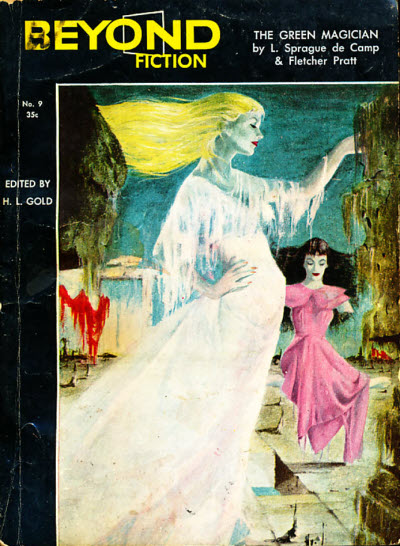
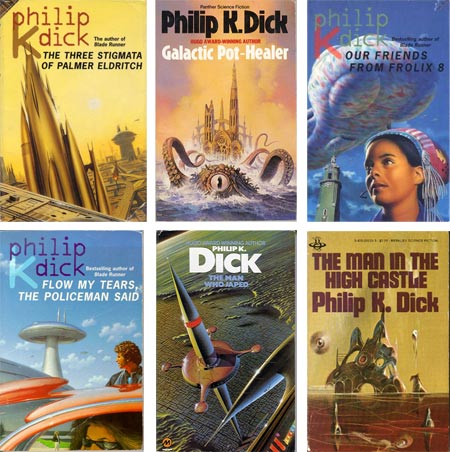
Although PKD died in 1982, he lived to see initial clips from Ridley Scott’s masterful Blade Runner, the first of over a dozen movies (A Scanner Darkly, Total Recall) based on Dick’s books and stories, and his ideas inspired many others. He wrote 44 novels, 121 short stories, and 14 short story collections. Over a dozen novels were written or mostly developed in Point Reyes Station, West Marin County, CA.
“There are no heroes in Dick’s books”, Ursula K. Le Guin wrote, “but there are heroics. One is reminded of Dickens…”
“What constitutes the authentic human being?” PKD
Anne’s The Search for Philip K. Dick, revised 2009, was PKD first bio before his posthumous career took off in 1993 “like a skyrocket.” Obscure until recently, the book was only available in a rare edition.
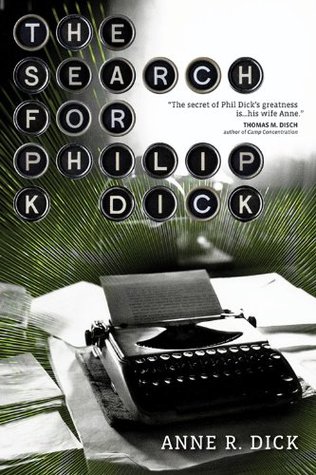
Anne and Philip Dick lived together in West Marin for five years, from 1958 to 1964. The NY Times called these “Philip K. Dick’s Masterpiece Years.” A most prolific time in his writing career, Dick’s output included one of his most acclaimed, The Man in the High Castle. The book made him world famous.
The couple led a mostly blissful loving family country life, even raising ducks and sheep. Sheep? Yes, Dick’s celebrated novel “Do Androids Dream of Electric Sheep?” was the basis for the film Blade Runner. Anne’s jewelry making was inspiration for the symbolism in The Man in the High Castle.
Then… Dick’s emotional demons took charge. Their marriage went terribly wrong. Physical altercations ensued. Dick deluded that Anne was trying to kill him, and even in his paranoia, was persuasive enough to doctors to get her committed to psychiatric care. The good news: Dick told Anne, “You are the greatest love of my life.” The bad news, Anne has said, “He left about seventeen times, and came back and left and came back.”
How did Anne meet the 29-year-old budding writer in rural California that late October, 1958?
Anne explains: “My first husband was a poet and he had died several weeks before. Here I am living way up in the country. We had been in the city, interacting with writers and painters, so I was always interested in people and in the arts and I heard this writer had moved to town, so I decided to go down and call on him one afternoon.” Dick was living there with his second wife at the time.
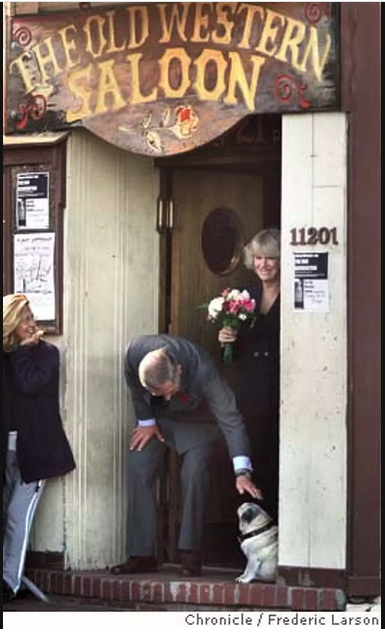
Anne’s first husband, Richard Rubenstein, was also a fascinating character, who once rode his horse up the steps into the local Pt. Reyes Station classic watering hole, The Old Western Saloon (which Prince Charles and Camilla famously visited in 2005*). He was a poet, lit magazine publisher, and acquaintance of Charlie Chaplin, Eugene O’Neill family, Kenneth Rexroth, e.e. Cummings.***
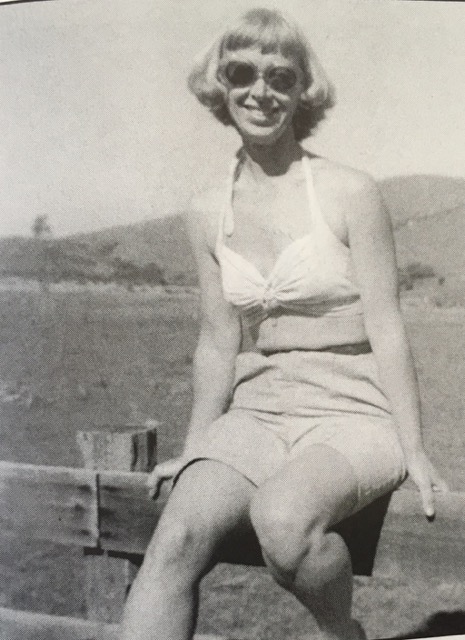
It became clear to me that despite it all—PKD’s oddities, emotional irrationalities, and faults— Anne still loved Philip, and tried to not speak ill of him. She retained Total Recall of the man. When I later read her well-written and researched bio/memoir, Search for Philip K. Dick, I was relieved that in print she was frank about Dick’s dark side. Despite all the scrutiny, Dick remains a supernova enigma, even to those who were closest to his heart. Her bio\memoir is not only a must-read for any PKD fans, but for anyone fascinated by romantic and creative turbulence. (Psst to producers: their love story would make a great mini-series.)
Conversation with Anne R. Dick, third Wife of Philip K. Dick, at her home, Point Reyes Station
12-15-15 and enhanced with a follow-up conversation to 5-14-2016
Fellow writer Susanna Solomon, author of Point Reyes Sheriff’s Calls and MillValleyLit contributor, introduced me to Anne. I doubt that Anne would have provided such an interview without local Pt. Reyes homeowner, Susanna, whom was known to her. I found myself attempting to balance my main interest in PDK while realizing and acknowledging Anne’s resilient confidence, creativity and writing which I knew little about. My bad. This led to some a couple of awkward moments.
Anne R. Dick, at 89, is still energetic and engaging with a depth of intelligence. She surprised me with a practical and down to earth (pun) attitude. When she mentioned that she was Midwest reared as I was, this made more sense. It is easy to see how brainiac Philip would have been enthralled with her as his new muse, especially as a pert blonde with a literary background and a creative flair.
Anne’s Bauhaus boxy home is above the little agricultural West Marin County town of Point Reyes Station, a requisite bicyclist and motorcyclist pit stop (The Bovine Bakery!), an hour northwest of Sausalito. Famed Point Reyes National Seashore is just a quick motorcycle ride away. The Dick ranch-style home is comfortable and artsy sitting on a large pastoral tableau.
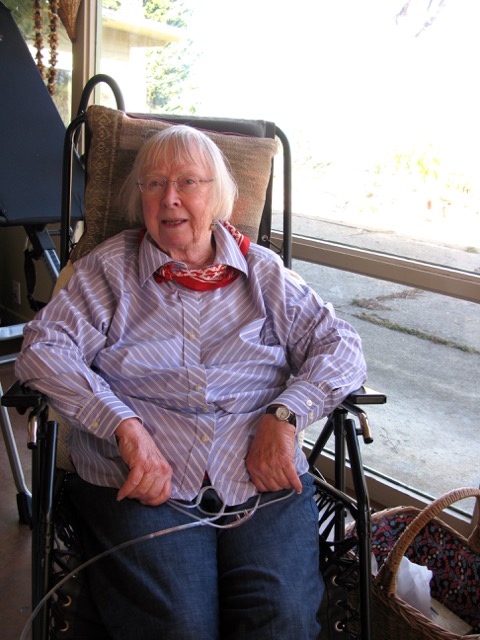
Anne walked to her rolling chair hooked to an oxygen tank, and settled in. She admitted that she was a bit tired that day and not quite with it. We three ate the sandwiches Susanna thoughtfully brought from Lagunitas Deli. Gracious Anne served us champagne (a first for my interviews!) as we chatted in the living room with two impressive glass walls overlooking the rear of her property. Anne said she was expecting a UPS shipment of her newest book, an autobiography, Anne and the Twentieth Century, perhaps that very day, adding an air of anticipatory excitement to our visit.
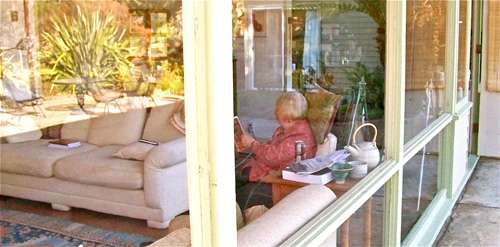
Anne home in which she had run a B&B. This is the room where I interviewed her. Photo: David MitchellJ. Macon King: Anne, I have to ask the drug question. I first heard about Philip K. Dick living in Marin through an article years back in the local paper. (Marin Independent Journal) It sounded like he sat out here in West Marin and burned through the speed like Kerouac, writing non-stop. Was that true?
ANNE: Philip has been categorized as an amphetamine freak. He really wasn’t when he was here. For the most part he was a lovely man. He didn’t really get weird until he left. A million thoughts are crashing into my mind all at once. He was a very nice man. And the Marin I.J. came by to interview me and their article made him look like a drug addict. I was so mad at them.
J: Well, it was the era—between the 60’s, 70s, 80s drugs were very commonplace. It would have been more forgivable then. Everybody was doing drugs. It was incredibly acceptable in many circles. But he lived with you and your three young daughters, and soon, yours and Philip’s, Laura, in this house, right?
ANNE: Yes. He just loved our daughters. While he was here he wasn’t taking anything like that. He was a hypochondriac and took a lot of pills. But what do I know? I’m from a Christian Scientist background. We never took anything. We didn’t believe in doctors.
Susanna: How did they persuade you to go on oxygen?
Anne Dick: Well I had to. I couldn’t manage without it.
J: It’s just air. (laughs)
Anne: I’m not a follower of that religion and I haven’t been since I was young. My mother brought me up to never feel that you have limits. Christian Science is something like Advaita Vedanta, an ancient Indian religion. It’s an abstract religion. God is Life, Truth and Love. They believed in mental healing way before anybody else did.
J: Positive thinking, visualization…
ANNE: I don’t know if they did that. They did what they call pray. Mary Baker Eddy was the founder of Christian Science. In her original book for the movement, she had thirty references to the Bhagavad Gita, later she took them out. The Congregational Church was the religion of the Puritans and Pilgrims. It was very dour and heavy. A number of new religions arose at the time of the Transcendental movement…
S: In the 60s?
ANNE: The 1860s. Not TM. A century off. And the Mormon religion arose then, and others. It was called the Second Great Awakening. You know about that?
J: Um, wasn’t that what happened to you when you married Philip? (laughs)
ANNE: (laughs)
J: I read that you and your first husband lived in St. Louis for a while. (Ed. note: where Anne attended Washington U.) I grew up close to there, in Illinois. That’s where we went to get any culture. Philip was born upstate, in Chicago. He died in Santa Ana. He lived in D.C., many years in Berkeley, here of course, and when did he live in San Rafael? (Santa Venetia neighborhood)
ANNE: After we were divorced. He lived in San Rafael with the 19-year-old daughter of our best friend.
S: That’s a young one…
ANNE: His fifth wife was around 17 when he met her! And he had a lot of women in between. He was incredibly charming. Somebody that charming comes along every thousand years. I mean he was… he had it…
(Pause. Appears to be an emotional moment.)
J: I almost don’t even have to ask you the question. He was a Sci-Fi writer but he wrote about romance, at least longing for love, in his books. The movies bring it out more, as they do, like Blade Runner with the replicant Rachel, but the basis was in his writing.
ANNE: I should give you my book and you won’t have to ask me anything. It’s all in the book. Everything I know is in the book. Search for Philip K. Dick.
J: Yes, I heard about that one. It is pretty extensive?
ANNE: I’ll give you a copy. I originally published the book through a university press in ’93. That was before Philip’s career took off like a skyrocket. I started writing it right after his death. I had never written before. I haven’t revised it too much or polished it, even though I’m a much better writer now, and my voice is stronger. I felt that it was written starting in ’82 the way that woman felt then.
J: So it would remain very authentic with the emotion.
ANNE: Yes.
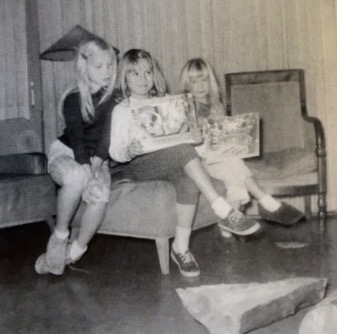
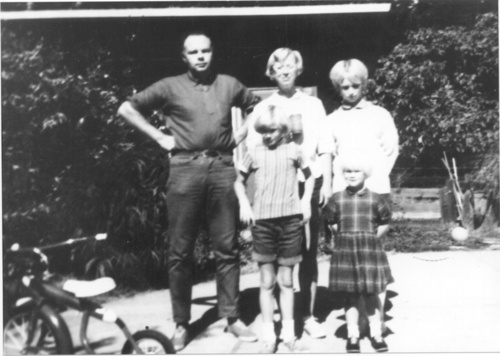
(She gives me Search… and several attractive books of her poetry as pictured below. I look at the volume’s photos of young Anne, Philip and girls.)
J: Thank you. I was leading up to a question. Anne, we were talking about Philip being charming. Was he a romantic?
ANNE: Very.
J: Was he romantic in the traditional sense—flowers and candy?
ANNE: He knew how to charm and woo women. He could charm men too, if he wanted. But he could turn it off, you know like a switch. With some people he could be very cold.
J: What was the key to his charm? His smile, charisma, intelligence?
ANNE: Very intelligent and a marvelous memory. He would listen, too. He was very modest and not egotistical. Not ever going around saying how great he was, the reverse actually. He wanted to be more than a science fiction writer; he wanted to be recognized as a literary writer. And he was literary. He is really not the same as the other science fiction writers of that time. He created a different genre.
J: Which has been popularized, carried on by others…
ANNE: In Europe they say, “Surrealism was created by the French but practiced by the Spanish.” In Latin America writers picked it up, like (Jorge Luis) Borges, Gabriel García Márquez and another Latin woman writer who lives in Marin now…
J: Isabelle Allende… Magical realism.
ANNE: Magical realism. Ursula Le Guin said that America never noticed, but we had our own Borges: Philip K. Dick.
J: Wow, I never really thought of Philip’s writing in that way, but yes, that makes sense. Interesting that Philip and Le Guin went to Cal (UC Berkeley) at the same time, even though they may have not known each other.
ANNE: No, I don’t think they knew each other.
J: In “…Electronic Sheep” (Blade Runner,) and “We Can Remember…” (Total Recall) and Man in the High Castle, there is longing, a yearning, a forbidden love, which comes through. My favorite Dick short story is “Upon the Dull Earth.” It’s like “The Monkey’s Paw” on steroids. The man loses the woman he deeply loves, bizarrely killed by ethereal vampire-like spirits. He gets her back when she is reborn as a revenant; only she begins to physically take over everyone—a waitress, a gas station attendant—all transform into his dead girlfriend. He literally sees her face everywhere. The story is horrifying at extraordinary deep levels of the human soul and psyche. Be careful what you desire!
What I’m trying to get at, was Philip was longing for love, like in his writing? He was married five times so I know he had to be a romantic! I wonder if his known attraction to women, if a special relationship, like a muse, was vital to his writing?
ANNE: Gregg Rickman** said that he was very empathetic. But it is hard to know the person you’re married to and live with, although I was very fond of him. We don’t even know our own selves.
J: So he had visions, and…
ANNE: That was all B.S.
J: So you think that was more what, marketing? Mystique?
ANNE: You know I just read part of a book about Philip Dick. The author was saying Philip Dick was so marvelous with reading the politics and culture, and then—he had to set himself up as a guru in later years. I think exactly the same thing.
J: I didn’t know that. He set himself up as a guru? With followers?
ANNE: Not literally. But yes. Yes. Everything he did was sort of playing a role.
J: Because he could “foresee” the future?
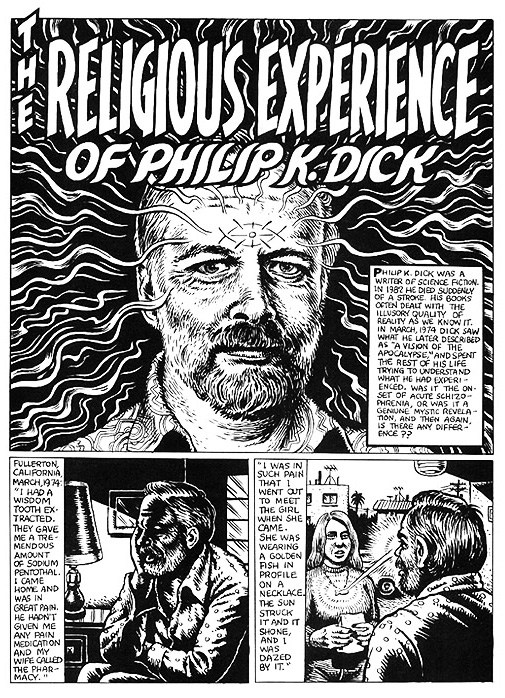
ANNE: He had that whole pink light experience and he wrote this enormous book, Exegesis, about his mystical experiences.
J: You thought it was all B.S.? The..? You didn’t believe him when he said…
ANNE: Oh, he may have had some experiences. I wouldn’t be surprised at that.
J: There was a story about… which wife was it? Their son, and his hernia?
ANNE: That was his fifth wife Tessa and their son Christopher.
J: Philip said that he had a vision while listening to “Strawberry Fields Forever” and the lyrics distorted to “your son has a hernia” or something. They rushed their son to the hospital where they found he did have a life threatening hernia. Did he ever pose himself as an Edgar Cayce or a Seth speaks…
ANNE: It wasn’t around me, I wouldn’t let him! (laughs)
J: Well, you’re like a down-to-earth Midwestern, Christian Scientist…
ANNE: A Downer!
J: Right. (laughs, imitates Anne) I don’t want any fancy medicines or anything! (continues) You must have had some, um, butting heads a little bit, if you were so down to earth, and he was so out there, right?
(Another seemingly emotional moment; Anne sort of fades away.)
ANNE: It’s hard to say. I’ve sort of forgotten. Let’s talk about something else. I don’t feel like I have much to contribute in this field.
J: You mean the airy-fairy part of it?
ANNE: You know I mean… people… Philip Dick died in 1982. 35 years ago. And I’ve had an endless stream of professors and scholars from Switzerland, and scholars from Denmark, coming by here and asking about Philip K. Dick. Then I wrote the book about Philip K. Dick, and I really don’t have much more to say.
J: OK.
ANNE: I mean I wouldn’t mind, but I’m tiring a bit.
J: Well, what would you like to talk about? Some of your work or writing, or…
ANNE: I didn’t particularly want to talk about it. I didn’t have any topics in mind.
(pause while Susanna props up the conversation with a local topic. Anne perks back up.)
ANNE: I was pretty much supporting him more or less while he was writing. He was only making $1000 a book, about $2000 a year. He was writing Ace back-to-backs (two works, one book, two covers), and he was one half the book, and he’d get a penny a copy. For one hundred thousand copies sold he’d get a thousand dollars. So he got about $2000 a year from his writing. I’d just given him half my house. He wrote a book here and dedicated it to me and I’m the heroine in it. And that was The Man in the High Castle.
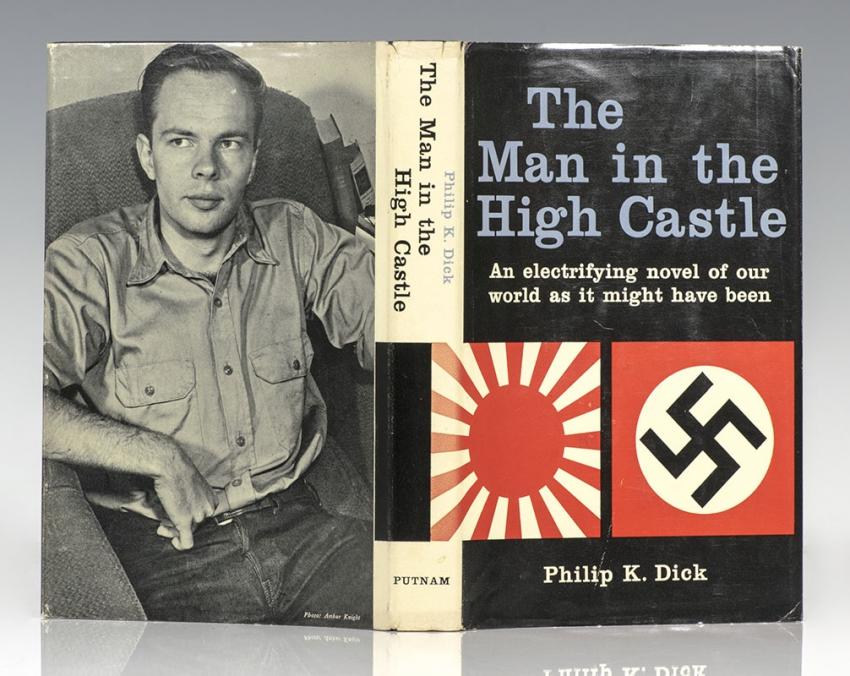
The house give-away wasn’t very smart. It caused me problems later on. And some years later he’s living with his fifth wife and he called me and told me, The Man in the High Castle is being reprinted, and do you still want me to keep the dedication to you?” And I didn’t answer him. (whispers) Naturally, naturally. Of course I did. And you know what? He changed it! And dedicated it to his fifth wife. “To my Tessa, who I love, who is a great and gorgeous lover…” whatever.
J: He weaponized his dedication?!
(Anne shows Susanna and I the original The Man in the High Castle book dedication:)
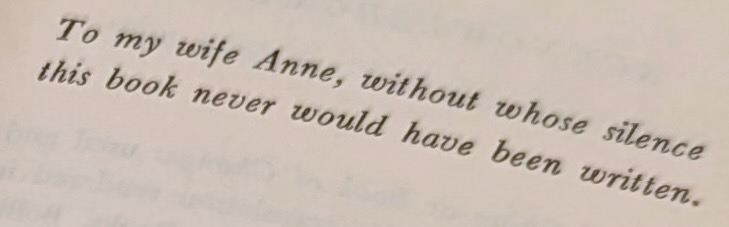
(I read it twice to verify my opinion. As we term these things in the midwest, this is a “back-handed complement.” Anne must know this but…considers it sweetly humorous? Her pride to this day certainly reflects an undying love for the man. I must be making a face as Susanna gives me a warning look. I refrain from comment and only nod.)
ANNE: My daughter was going to school at University of Colorado. She went into a bookstore with her friend, and says, “I want you to see this book that Philip K. Dick dedicated to my mother.” And she opens it up and sees the dedication to Tessa.
J: Oh my gosh. How embarrassing.
ANNE: It’s a terrible thing to change a dedication. That’s the way he was. He was very charming on top and sort of mean some times. But I didn’t answer him when he asked if I wanted the book dedicated to me again.
J: That’s sad. In the “High Castle” TV Mini-series, the central piece of jewelry is a little heart. Did you make anything like that? Or is it different in the book? Which I’ve just started.
ANNE: I haven’t seen the show yet.
J: A little rusted heart on a chain. It’s symbolic and pivotal throughout the show.
ANNE: No, it’s a small metal form from my jewelry business in the book. The New York Review of Books says Phil’s book is deeper and more nuanced than the TV series. In the book, the Japanese gentleman, a lovely man, takes the small metal piece and rubs his fingers on it and it moves him from the world where the Japanese and Germans have taken over the United States after WW II, and into our real world. He walks up the street in San Francisco, and he doesn’t like it at all, you know so strange, and he comes back to his own world is much happier there.
J: Which character was Philip?
ANNE: They were all Philip. (laughs)
J: The characters were all Philip?
ANNE: Yes. Of course. (laughs)
J: Different aspects of him, you mean?
ANNE: Yes.
J: Who is the real man in the High Castle? The Japanese man? There are all these characters he could have been. God? In the show, even Hitler…
ANNE: It was Philip. The man in the High Castle was a writer. You need to read the book. Philip wrote this book at my house. He felt so good he wrote this wonderful book and it won the Hugo, the biggest science fiction award.
S: Now that you finished your Anne book are you taking a little hiatus or are you writing?
ANNE: No, I’m writing. I have two science fiction novels here. I’m rewriting one. I’m doing other writing too.
J: I think your book about Philip would be fantastic as a mini-series.
ANNE: I think so, too. You should tell the producer of the Amazon series “The Man in the High Castle.” (laughs)
J: Ridley Scott. Actually, Sir Ridley now. I love his work. Speaking of creative people, I did a little research on your first husband, poet Richard Rubenstein, and what a character he was, too. You know how to pick the live ones!
ANNE: My oldest daughter is working on publishing Richard’s poetry.
J: Richard grew up in Alton, Illinois, across the river from St. Louis. As I kind of mentioned, Alton’s forty minutes from where I grew up.
ANNE: Yes, home of Robert Wadlow, the world’s tallest man. I saw him once, my God he was tall!
J: My dad saw him as well. I did see the statue of giant Wadlow which Alton installed.
J: I read that Richard rode his horse up the steps and into the Western saloon here in town…
Anne: (laughs) Yes!
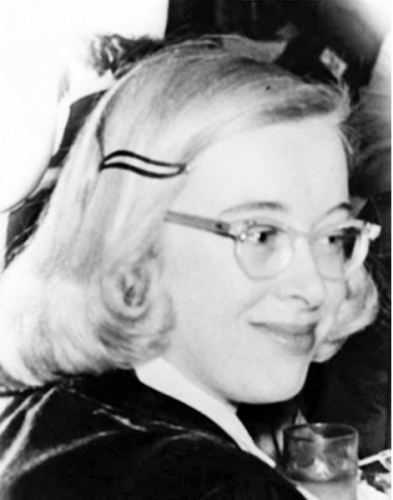
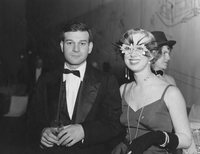
J: …rode right into the Western one night! Whiskey for my horse, make that rye! (all laugh) And Prince Charles visited it a few years back. I have a tough question if you don’t mind. I find you intellectual, charming, engaging, and I just saw some early pictures of you and you were an attractive, perky blonde, and I saw that picture of you and Richard with a masquerade mask…
ANNE: Oh, that was at the ball at the St. Louis Art Museum.
J: Oh. I used to go to exhibits there. And you looked really cute there, so my question is why did you never remarry after Philip?
ANNE: He was hard act to follow. He was modest, helpful, loving, affectionate, good with the children, liked to cook, mopped the floors, went off and wrote books for me and dedicate them to me. He was a lovely man, except that he thought I was trying to kill him! (laughter)
J: Other than that!
ANNE: (laughs) Other than that.
J: And I know it must have been difficult for you, a single mom, all those daughters, and some men would be scared off by that, but I think that some man, like a rancher or horsey man, would have snagged you up.
ANNE: I scared them off. I was too assertive. I would be so blah or I’d be so responsive, it scared them. And Philip loved those girls. But he was a very complex man. Have you read “The Three Stigmata of Palmer Eldritch”?
J: No. I will. Did you help with his editing or go through his work, or did he keep that close to the vest?
ANNE: Pretty much close to the vest. But I would read them. He wrote one draft novels. 60,000 words – poof. He was a very fast typist. He would make a few notes over a few months in advance and he’d be thinking about them. I would read them for inner conflict or contradiction…
J: What they call in movies “continuity?”
ANNE: More inner logic. That would be the very last minute. Earlier he would never really share what’s going on.
J: I can’t write like that. Most of mine is continuous molding like a ceramic clay piece.
ANNE: I have trouble getting the first draft down. I have to polish and polish. I’m dictating another book. I’m dictating to the iPad and then over to the computer.
J: You use Dragon Dictate?
ANNE: Yes, and Evernote.
J: I used Dragon to start my first novel. It was narrative, first person. You get a lot out of you quickly. Then you have to correct everything. (laughs)
ANNE: I heard that you get very good dialogue that way.
(Knock, knock, knock! at the door)
J: Maybe it’s UPS with your new book!
(general authorial excitement about the shipment of Anne’s new book)
S: Anne and the Twentieth Century!
(Craig Bailey, Anne’s longtime assistant calls in from door: No, it’s the new washing machine.
J: Oh. It would have been cool to be here when the your new books arrived.
ANNE: At least I’ll have clean clothes when they do!
END
All family photos with permission of Anne R. Dick.
Addendum to this republication: Anne did relate to me, when I specifically inquired, additional information about her stormy marriage to Philip. Off the record. Now, almost ten years after her passing, I will reward readers that have made it to interview’s end— with the suggestion to read between the lines. What unspoken reason would tormented genius Dick keep leaving his family and keep coming back? Leaving the “silence” of his doting, supportive wife– in all ways– and four adorable young blonde daughters, and returning? Why, after breaking away did he start dating and marrying younger and younger women?
** Gregg Rickman, professor SFSU, author, expert on PKD, who interviewed him extensively. Philip K Dick: In His Own Words; To the High Castle Philip K Dick: A Life 1928-1962; Piper In the Woods: Philip K Dick On Life and Death; American Dreams: Philip K. Dick’s Pre-Acid Trip to Now http://www.thedailybeast.com/articles/2015/08/23/american-dreams-philip-k-dick-s-pre-acid-trip-to-now.html .*** Rubenstein, Beat poets, and show biz —for more information see:
https://www.geni.com/people/Richard-Rubenstein/6000000003496793501)
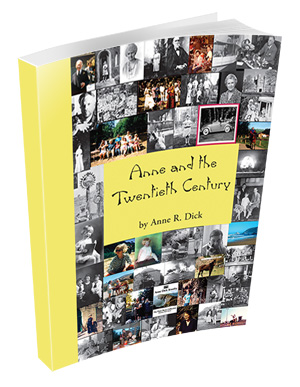
Anne and the Twentieth Century
“Anne Dick’s autobiography is a peek into a long-gone St. Louis-and a funny, elegant chronicle of her own extraordinary life.” —The Arts: Belles Lettres, Stefene Russell October 17, 2014
Poetry by Anne R.Dick
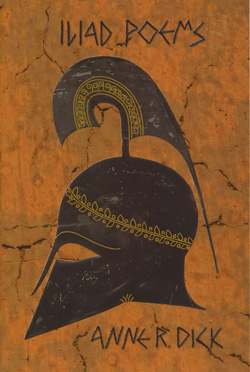
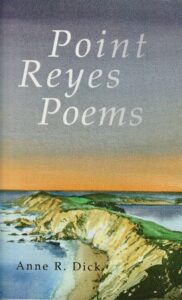
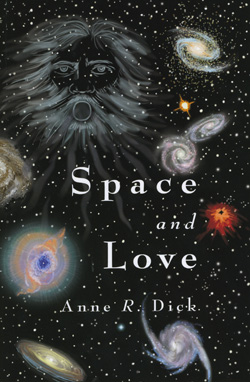
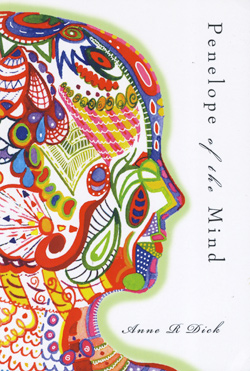

by Anne R. Dick
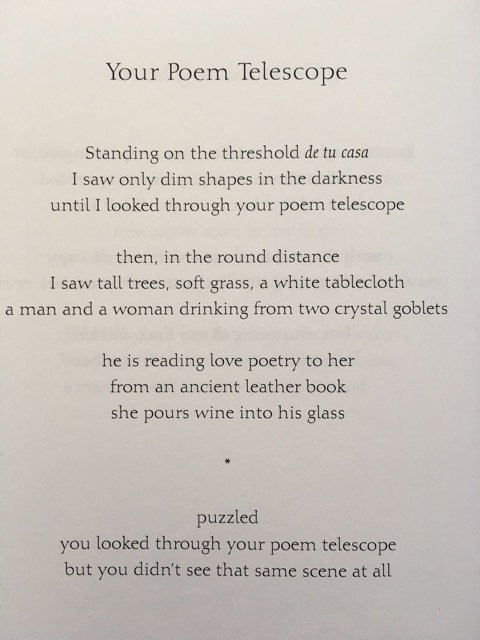
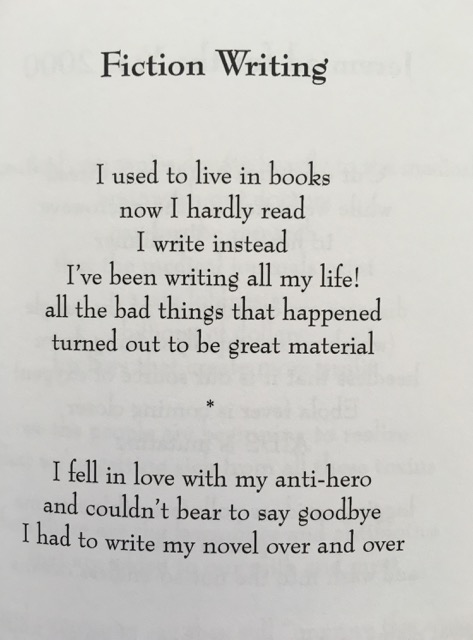
“Families” from Penelope of the Mind peeks into life with Philip K. Dick:
Safety-danger, love-hate, loyalty-treachery
chains of commitment and rejection
power, power, power
Slavery
the bondage of guilt
MONEY, not enough, too much
envy
greed
conflict
I only love you if you’re useful to me
if you don’t disturb me too much
if you become the person I want you to be
Anne R. Dick jewelry art
For additional PDK information see our Philip K. Dick Speed Round here and The Man Who (really) Fell to Earth here.