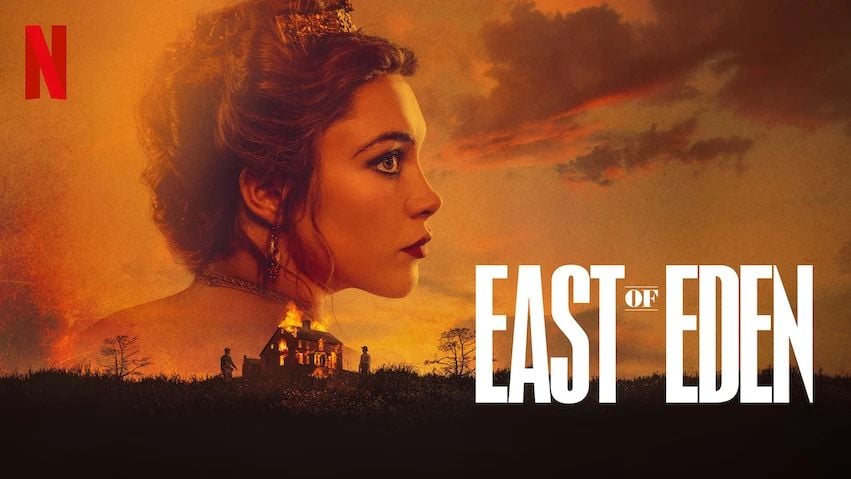
EAST of FLORENCE
essay by J.Macon King
If the 1955 East of Eden is one of your favorite films, your excitement viewing the Netflix series, as well as your reservation, is understandable. Rightfully so. James Dean’s Cal Trask is such an extraordinary performance, and Elia Kazan’s direction (On the Waterfront, Streetcar Named Desire) has a raw emotional power that’s difficult to reproduce. But here’s something important: The Netflix series isn’t really trying to remake the James Dean movie.
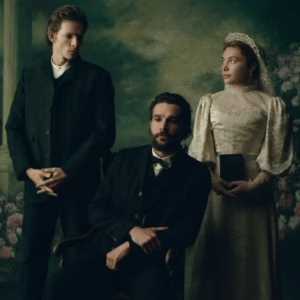
The famed director Elia Kazan granddaughter, Zoe, is the writer and show-runner, bringing a feminine, if not feminist viewpoint to Steinbeck’s classically masculine-yet-sensitive writing. Kazan was asked about this in an interview with W Magazine. She said: “I don’t think Cathy Ames is a feminist.” But Kazan also acknowledged that she approaches her writing from a feminist viewpoint.
What is impressive, is that she bravely took Steinbeck’s entire 601page, 1952 magnum opus as her basis, instead of the final chapters of the movie. The 1955 film concentrates largely on the latter portion of Steinbeck’s novel, especially the conflict between Cal and his father. The new adaptation takes a broader approach, with considerably more attention to Cathy Ames.
I was already a Steinbeck fan, beginning with viewing the Dean movie by “chance” at a young age and it seeded discontenting yet validating influences on my life. More on this later. Having visited the Salinas Steinbeck Museum, induced me to finally reading his imposing Biblical referenced Eden novel, I almost wanted to dislike the new series.
Ahem. A sidebar, if you please. The original movie, I first saw by chance (or blessed design?) at about age nine or ten. Because of a medical issue, since age five, I had not been allowed to take P.E. or play sports, or really do much physically. This limited my confidence and certainly, acceptability. Fortunately, I was smart, creative, and loved to read.
My tough, athletic neighbor kid, Kirby, befriended me. His sizable family and in-laws, led by dad Louie, were salt-of-the earth hunters, fishers, rough-housers, beer-drinkers, swearers, wrestlers, perpetually skinning things and cooking out with a variety of visitors, working on old cars. My family was blue-collar, but my soft-spoken, by-the-book father was highly intelligent yet poor, musical, non-drinking, bible-reading with the family (just like the movie scene), and well, Adam Trask-like. Loving but rather boring. Fo a while I went to Sunday school on my own, almost to create my own spiritual space.
Kirby and his family accepted that I was “different,” and I eagerly enjoyed their more earthy difference. Here’s the point. Kirby and his family took me to visit a relative’s large, working farm, with tractors and farm animals and barns, and lots of bare ground. Visualize the TV series Trask farm. The menfolk were all off doing farmy, barny, mendy things, in which I was gently advised I didn’t need to help. The womenfolk were all in the farmhouse kitchen preparing a gigantic supper. Fate intervened in a pivot point.
The TV was on in the front room, so I watched some young handsome, sensitive-looking man daringly riding atop a speeding train. Wow. I was hooked from first look. I stood, fascinated, before the small black and white screen for a long time before plopping onto a sofa. I felt as if Cal was me on this very farm. Both of us trapped, in many regards, into a life that was alien to our souls. That feeling, subconscious as it probably was, never left me. More, that life was worth taking risks and experiencing life, even if that, would be the end of it.
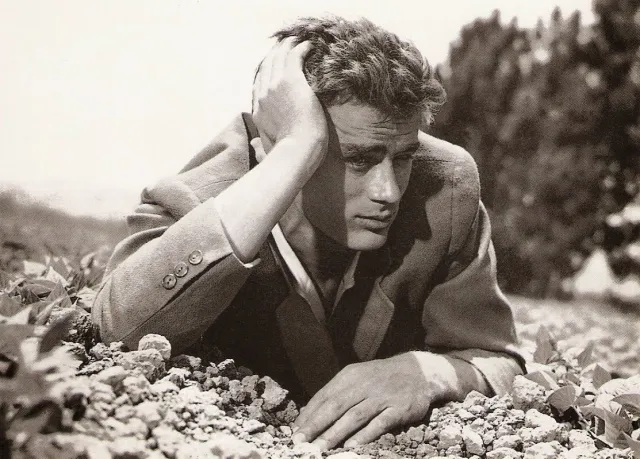
I had no idea who James Dean or Kazan were, or that the movie told only a portion of a much larger, more complicated family saga. What fascinated me about East of Eden is that Cal’s rebelliousness isn’t simply youthful defiance. James Dean’s extraordinary performance as Cal was wild, impulsive, unpredictable, sometimes almost childlike. Yet underneath all that rebellion is an astonishing vulnerability. Of course, the tragedy is that the harder Cal tries to earn his father’s love, the more he risks destroying the relationship. (Extrapolating: or earn a mother’s, would-be-lover’s, friend’s, or community’s love.)
Cal Trask was easy to identify with. I wasn’t just absorbing Steinbeck’s themes of good and evil or the biblical symbolism. I was responsive to this restless, rebellious yet sensitive young man who couldn’t seem to fit into the world his parents had (poorly) created for him. And that’s the remarkable thing about great storytelling. It reaches us emotionally long before we fully understand it intellectually.
I was fascinated to read that Pugh “as a child she suffered from tracheomalacia, which caused breathing problems and led to frequent hospitalization’s.” This resonated with my own childhood health battle. Though, after Netflix series E 1, I wasn’t sure I wanted to continue, and it wasn’t the visceral scene of the body dragging onto the porch, which repelled some viewers as gratuitous, familiar with the book or not. Here’s an interesting detail: Zoe Kazan deliberately chose that scene to open the series, even though she originally intended to begin elsewhere in Steinbeck’s story. Kazan using the “in medias res” plot technique—opening with a dramatic event, then going back to show how the characters arrived there. There, exposed in later episodes we understand why this was really an advanced pivot point.

Then, when the scene returns, the camera shifts to Cathy’s point of view. We see the brothers as she sees them. Perhaps she’s frightened, perhaps she’s calculating, perhaps she’s already assessing which man she can manipulate. Same dialogue. Same event. Entirely different psychological experience. And Florence Pugh, with precisely those expressive eyes and features, was a wonderful instrument for that shift to make the series about her. There’s a literary term closely related to this: “focalization”—the distinction between what happens in a story and through whose consciousness we experience it.
In Steinbeck’s novel, Cathy is almost evil incarnate. She’s manipulative, cold, calculating and seemingly incapable of ordinary human empathy. My reading is that Zoe Kazan wants us to understand Cathy, perhaps even sympathize with her, without necessarily forgiving her. Cathy, is considered the Biblical Eve, seduced not merely by evil, but by the intoxicating promise of freedom and choice. There’s a marvelous irony there. Freedom of choice—timshel—is ultimately Steinbeck’s great moral affirmation. Yet Cathy exercises that freedom in ways that are destructive, selfish, mean and often monstrous.
Cathy is both Eve and Serpent. She wants freedom from the constraints imposed upon her, but she also tempts, manipulates and constrains others. That’s where Zoe Kazan’s interpretation becomes interesting. Is Cathy wicked because she chooses evil, or because the world has left her so few acceptable ways to be free? Of course, Steinbeck might answer that she still has a choice. Is Cathy using her sexuality to exercise power, or is Kazan’s camera using her sexuality to seduce us into sympathizing with her? Perhaps both.

The marvelous Florence Pugh! We may recognize her toned-down from Oppenheimer, and from Lady Macbeth, Dune, Black Widow. Pugh can communicate contempt, calculation, vulnerability and suspicion with barely a movement. What I particularly like is that one can’t always tell whether Cathy is feeling genuine emotion or calculating how to manipulate someone. That ambiguity makes her fascinating. Florence Pugh is certainly captivating. And that dangerous combination of mesmerizing beauty, sensuality, intelligence, and unpredictability is Cathy’s power.
Pugh at the 2026 BFI London Film Festival
One of my reasons for hesitation in embracing the series—I didn’t see actor Christopher Abbott for Adam Trask nor Joseph Zada for Cal as the best choices. I did approve of Mike Faist as the tormented Charles Trask. (Jets leader “Riff” in Spielberg’s West Side Story) But from E 2 on, I settled in and liked the show and Abbott more, and as Abbott\Adam aged, he grew into the role as did my appreciation of his challenging portrayal. The makeup artists, and Abbott, did an impressive job of transforming and aging Adam over the years. Filling charismatic James Dean shoes is beyond challenging, and Zada couldn’t come close enough for me. Florence Pugh, along with Samual Hamilton’s Ciarán Hinds (Game of Thrones) and Lee’s Hoon Lee (Your Friends and Neighbors) are superb.
If this sounds more like a beautifully produced, psychologically intense literary drama than standard Netflix entertainment, it is. The principal reservation is that it occasionally sacrifices Steinbeck’s subtlety for heightened melodrama. But, hey, it is TV.
Viewing East of Eden as that innocent, naïve, and insecure rural Midwestern lad helped shape my own acceptance, and later rebelliousness. This would lead to attraction to the hippies, then Kerouac’s Beat Generation and its wild literary spirit. There’s certainly a connection between Cal Trask and the outsiders who populated so much of Beat literature. By age twelve I had overcome my medical constraints, by fifteen I would be buying and riding motorcycles against my mother’s orders, by nineteen dropping out of a full-ride college scholarship, hitching to San Francsico and beyond, essentially abandoning home for almost three years.
It wasn’t until this new East of Eden series arrived, that I fully understood, how the film had planted a little seed of non-conformity and rebellion in me as future traveler, writer and poet. I wonder how many other youths watched, absorbing, “It’s not just OK… but it’s cool for me to be different.”
END
Note: This essay\review used research through ChatGPT, or as I call it, “Cheerful Charlie.”
Cast Extras:
Pugh’s tremendous emotional range and can communicate volumes with her face. Pugh plays her with a wonderful combination of toughness, sarcasm, and unexpected humor. The English actress told LIVE WITH KELLY AND MARK that this new adaptation of East of Eden is the “part she is most proud of in her career.”
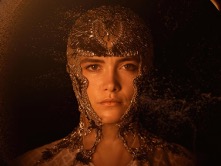
Pugh as Princess Irulan Corrino — Dune: Part Two (2024) She’s the daughter of Emperor Shaddam IV (Christopher Walken). She’s politically astute, observant, and becomes important to Paul Atreides’ plans for the imperial throne. Pugh has a relatively small but significant role, setting her up for a larger part in the Dune saga.
That jewel-encrusted gold skullcap is magnificent. It gives Princess Irulan an almost Byzantine, imperial look—part medieval royalty, part futuristic empress. And with Pugh’s striking eyes and blonde hair, it’s an unforgettable costume. She looks as though she stepped out of a Renaissance painting and landed 20,000 years in the future. Quite a contrast with our wicked Cathy Ames!
Lady Macbeth (2016) A young woman trapped in a loveless marriage who becomes increasingly ruthless. Probably the closest thing to her Cathy Ames performance. My first recommendation for you.
Oppenheimer (2023) Played Jean Tatlock, Oppenheimer’s passionate and troubled lover. A smaller but memorable role.
Dune: Part Two (2024)An imperial princess
Midsommar (2019) A disturbing psychological horror film. Her performance is extraordinarily intense.
Little Women (2019) Played Amy March and earned an Oscar nomination. A completely different side of her talent.
We Live in Time (2024) A moving romantic drama opposite Andrew Garfield.
She’s a highly trained Russian assassin and the adoptive younger sister of Natasha Romanoff, Scarlett Johansson’s Black Widow.
Her Marvel appearances include:
- Black Widow (2021) — Her debut as Yelena.
- Hawkeye (2021) — Recurring role.
- Thunderbolts (2025) — One of the central characters, alongside Sebastian Stan and David Harbour.
- Spider-Man: Brand New Day (2026) — Returns as Yelena.
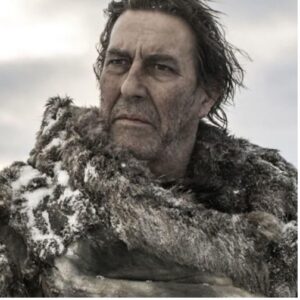
Ciarán Hinds played Mance Rayder, the King-Beyond-the-Wall in Game of Thrones.
He appeared in Seasons 3, 4 and 5. The charismatic leader who united the Wildling tribes north of the Wall. He commanded an enormous army that threatened Castle Black. He was a former member of the Night’s Watch who deserted to live among the Free Folk. And the big confrontation with Jon Snow? That was Hinds! Quite a transformation from the warmhearted Irishman Samuel Hamilton in East of Eden.